

Video of the Week
Deep Dive of the Week
Why Fintechs and Crypto Companies Want US Bank Charters

I treat “getting a charter” as buying a different physics model for your business. It is not branding. It is permissioning, funding, and durable control over dependencies.
Fintechs pursue charters for three hard reasons: (1) cheaper and stickier funding via insured deposits rather than wholesale lines and securitizations, (2) federal preemption and single-regulator operating posture instead of state-by-state licensing and sponsor-bank fragility, and (3) direct or more durable access to payment rails and network roles that are otherwise rented through partners.
Crypto companies pursue charters, especially national trust bank variants, to sit inside the regulated custody and settlement perimeter: fiduciary custody, qualified custodian posture, reserve management for stablecoins, and in some cases stablecoin issuance under the post-2025 federal stablecoin framework.
The trade is non-negotiable. You exchange speed for sovereignty. You reduce partner risk and unit funding costs, but you accept capital lock-up, BSA/AML burden, examiner-driven operating cadence, affiliate constraints, and higher scrutiny on anything that looks like regulatory arbitrage.

This week’s reports

1️⃣Governments are entering a new phase of AI adoption
2️⃣Fintech VC Is Repricing Around AI, Infrastructure, and Liquidity
3️⃣Why 97% of Banks Are Falling Behind in AI
4️⃣The internet was built without a native payment layer
5️⃣Mexico is structurally primed for a Fintech 3.0 shift
6️⃣Tokenised money is not a new payment method. It is a redesign of settlement architecture
7️⃣Stablecoin Utility Report 2026
This week’s insights
1️⃣Embedded Fintech Vertical Snapshot: Automotive
2️⃣The United States is not adopting tokenization for novelty. It is weaponizing distribution
3️⃣Settlement on the blockchain: Stablecoin payments finality in focus
4️⃣Stripe vs Adyen
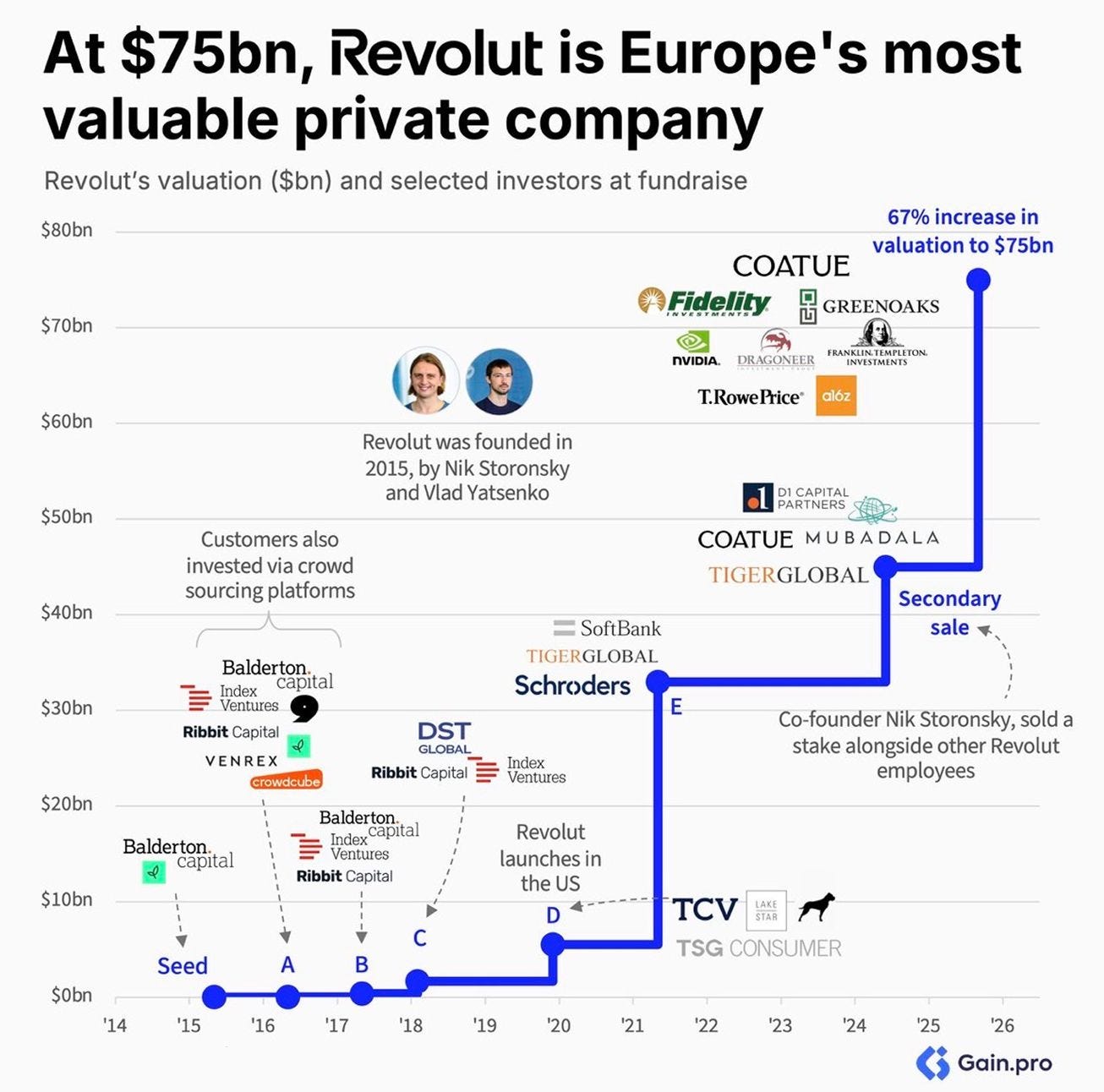
5️⃣Revolut eyes $100bn valuation with fresh share sale
6️⃣Understanding Agentic Payments
7️⃣A clearer view of stablecoin payment activity
Embedded Fintech Vertical Snapshot: Automotive
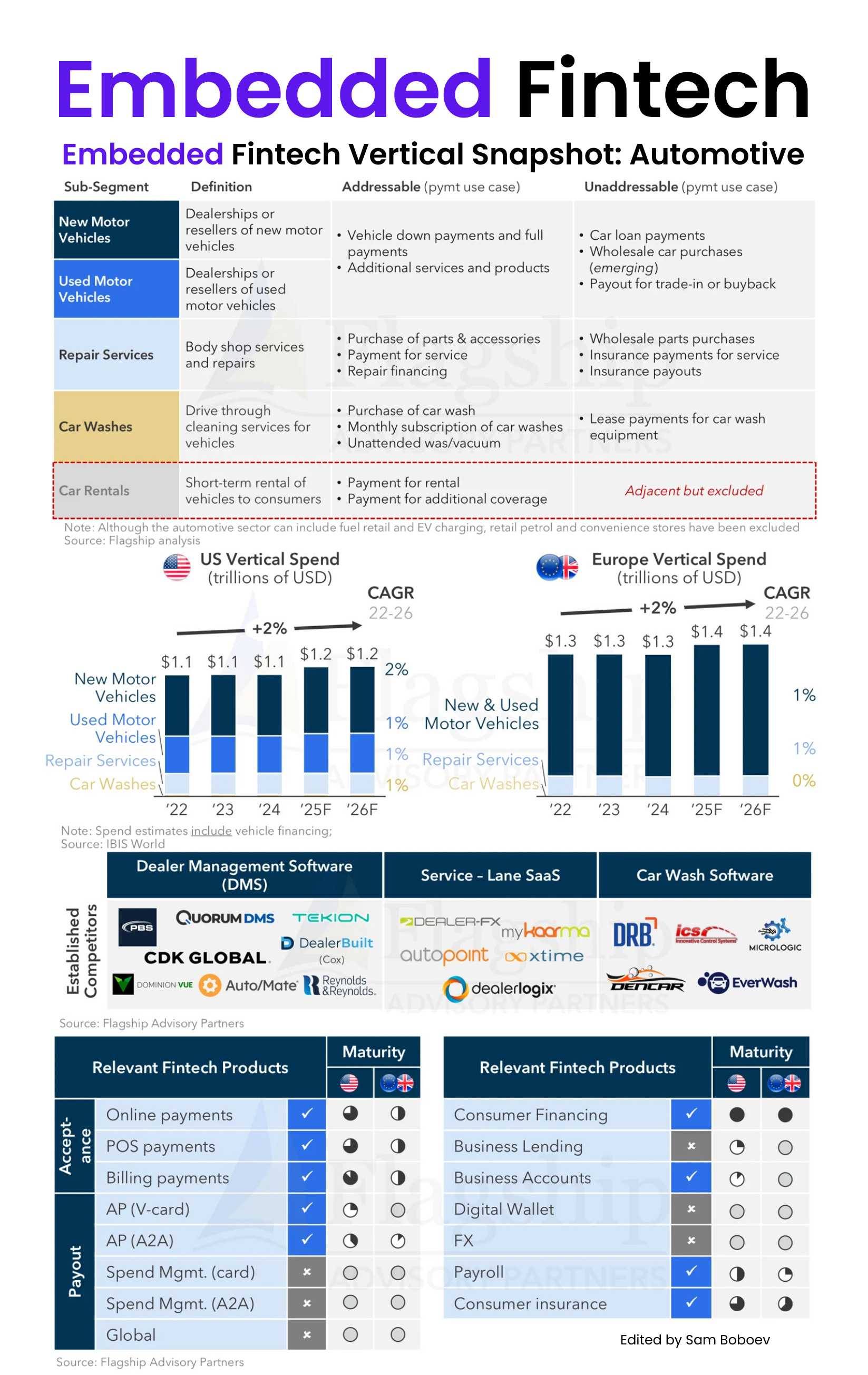
The automotive industry is highly complex with high software penetration (95% of companies use software to manage at least part of their business). However, embedded fintech adoption varies. While payment acceptance is relatively mature, we see substantial opportunity, especially in payouts and lending.
General Commentary & Highlights
- High software usage: The automotive industry is very dependent on software. 95% of companies use software to manage at least one part of their business in US and EU.
- Consolidated list of providers: Most dealerships rely on dealer management systems (DMS) for end-to-end business management. Various point solutions also exist to service specific functions or business areas.
- Tender Mix: Vehicle financing is largely un-addressable by PSPs, but remaining serviceable payment opportunity, is large, and card-centric (credit + debit covers 75% or more in the US and EU). This pool of volume largely originates from the service lane.
- In-car payments: enable drivers to transact directly from their, are seeing increased adoption; however, usage remains largely confined to car washes and has not yet extended to repair services.
Embedded Fintech Highlights