


Fraud rates have fallen two years in a row. According to Sumsub’s new Identity Fraud Report, the global rate dropped to 1.6% in 2026.
That sounds like good news until you look at what’s left. Last year’s edition showed sophisticated fraud up 180%, even as the overall rate fell. This year follows the same pattern. There are fewer attempts, but more of them come from professional fraudsters working in networks, and they’re much harder to catch.
The part that stood out to me was AI agents.
More than half of the businesses Sumsub surveyed have detected or suspected fraud involving an AI agent. Only 37% check who authorised the agent in the first place. Just 12% say they can suspend or revoke its access.
That last number is the one I keep coming back to. An agent can read files, talk to customers, access internal systems and act on someone’s behalf. If a company can’t switch it off quickly, a compromised agent keeps working for whoever is now giving the instructions.
Legitimate agents are exposed too. Among businesses that saw agent fraud, 49% had watched a real agent get manipulated by malicious instructions. So the question goes beyond whether the agent is real. Companies need to know who authorised it, what it’s allowed to do and who can stop it.
The second shift is where fraud lands. 43% of businesses reported confirmed identity fraud. Of those hit, 36% dealt with someone impersonating an employee, supplier or partner. The goal is usually simple: get a payment redirected, an invoice paid or access approved.
The damage rarely stops at the fraud itself. Affected businesses reported higher prevention costs, reputational damage and customer reimbursements. Only 3% said there was no business impact at all. And 40% took more than a day to spot their most serious incident.
Fraud is also becoming more collective. A third of businesses that experienced fraud said at least a quarter of their confirmed cases were linked to a wider network. Yet only 21% use fraud network analysis. Looking at one account at a time misses the operation behind it.
For those of us in Europe, Romania has the highest fraud rate in the region at 2.9%, and it also grew the fastest, up 101%. Italy saw deepfakes grow 251%.
Checking a customer once at onboarding used to be most of the job. These numbers suggest the same question now has to be asked whenever a person, a supplier or an agent asks for money or access.
This week’s fintech reports highlight the growing adoption of AI agents, stablecoins, and tokenized assets, alongside rising concerns about security, regulation, and market maturity. Although global identity fraud rates have declined, increasingly sophisticated fraud networks and AI-driven attacks are creating new risks, making stronger identity verification and agent controls essential. Meanwhile, Solana is gaining institutional traction, stablecoin payments are expanding, and tokenization is moving toward more liquid and accessible markets. Visa and Mastercard see agentic commerce as a promising but still emerging opportunity, while banks are exploring AI agents for onboarding, customer service, and payment reconciliation within strict operational limits. At the same time, fintech funding continues to weaken, reflecting a more selective investment environment
Video of the Week
Deep Dive of the Week
Visa’s Q4 and Mastercard’s Q3 2026 results show where agentic commerce is heading

Visa has just closed its strongest year of net revenue growth in more than 15 years, if you strip out the post-pandemic rebound and acquisitions. Fiscal 2026 net revenue came in at $45.9 billion, up 15%, with $12.1 billion in the September quarter alone. Yet when Morgan Stanley’s James Faucette asked whether agentic commerce would show up in the fiscal 2027 numbers, Ryan McInerney did not hedge. “It all remains very small in the big scheme of the enormous size of our business,” he said.
Two days later Mastercard posted $9.8 billion of third quarter net revenue, up 14%, and Michael Miebach gave a near-identical read. Agentic transactions are “ramping up at impressive weekly growth rates,” he said, but “the numbers are not yet significant in the grand scheme.”
Both agree the money comes later. The real subject of both calls was who gets to define a trusted agent transaction before the volume arrives, and there the two are starting to split in ways that matter for anyone building on their rails.

This week’s reports
1️⃣Solana: Tokenholder Report
2️⃣The State of Tokenization
3️⃣The stablecoin playbook: How to move from strategy to executing your first transaction
4️⃣Stablecoin Payment Activity Report
5️⃣Agentic Payments Need a Foundation of Trust and Safety
6️⃣State of Fintech
7️⃣Agentic AI in Banking
Solana: Tokenholder Report
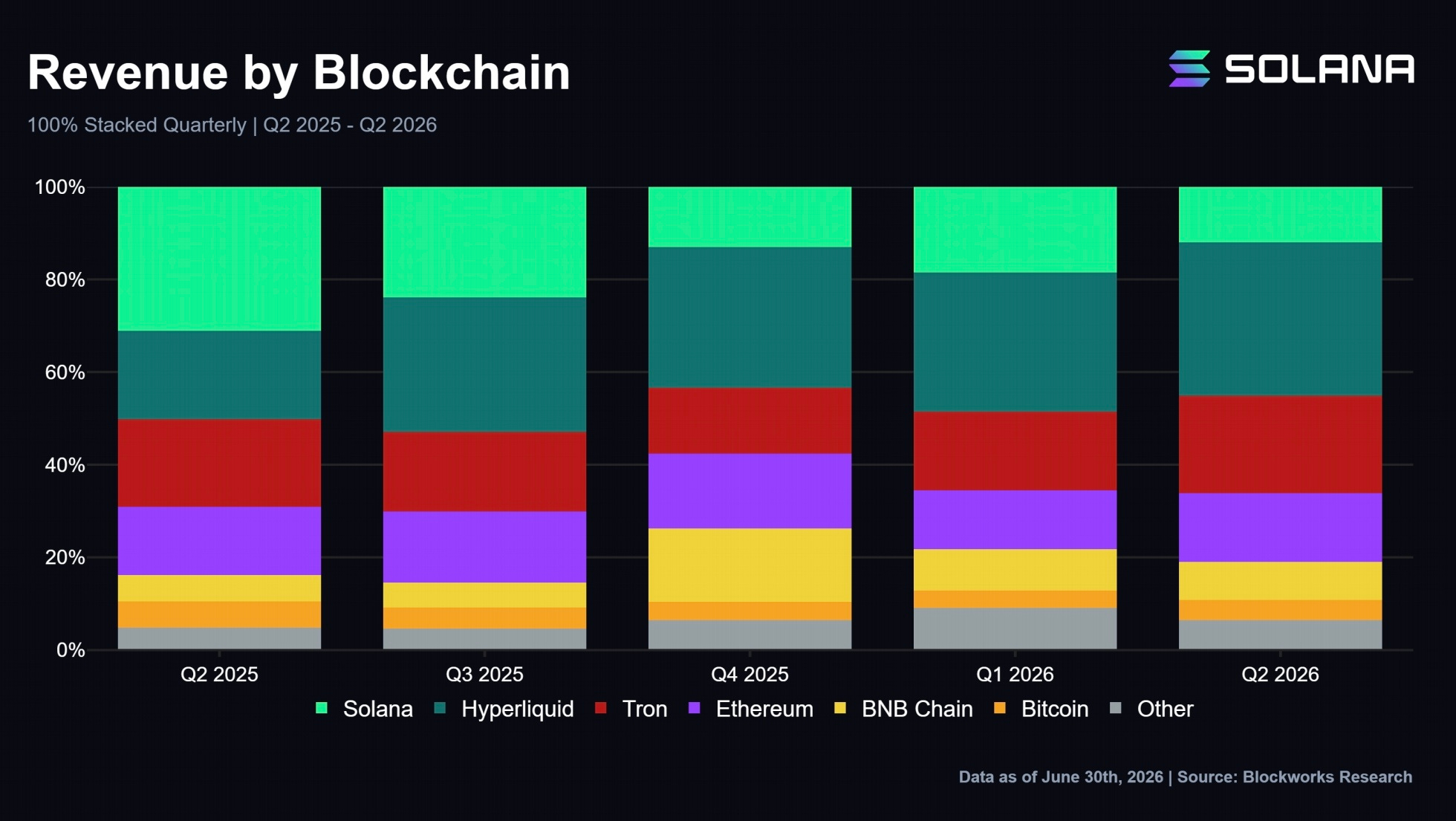
Solana processed $1.5 trillion in stablecoin transfers in Q2 2026, according to a new report from Blockworks Advisory.
But what caught my attention was how traditional financial institutions are increasingly adopting the network.
According to the report, 7 of the world’s 29 systemically important banks now have live Solana capabilities.
These include JPMorgan Chase, Citigroup, BNY Mellon, Morgan Stanley, Société Générale and State Street.
Their activities span tokenisation, custody, stablecoin issuance and settlement.
The report also highlights several interesting developments:
$16.3B in stablecoin supply, up 2% quarter-on-quarter.
$5.8B in tokenised asset trading volume, up 114%.
$4.8B in tokenised equity trading, with Solana accounting for approximately 97% of volume across blockchains.
9.8B non-vote transactions processed, with median transaction fees averaging just $0.0004.