

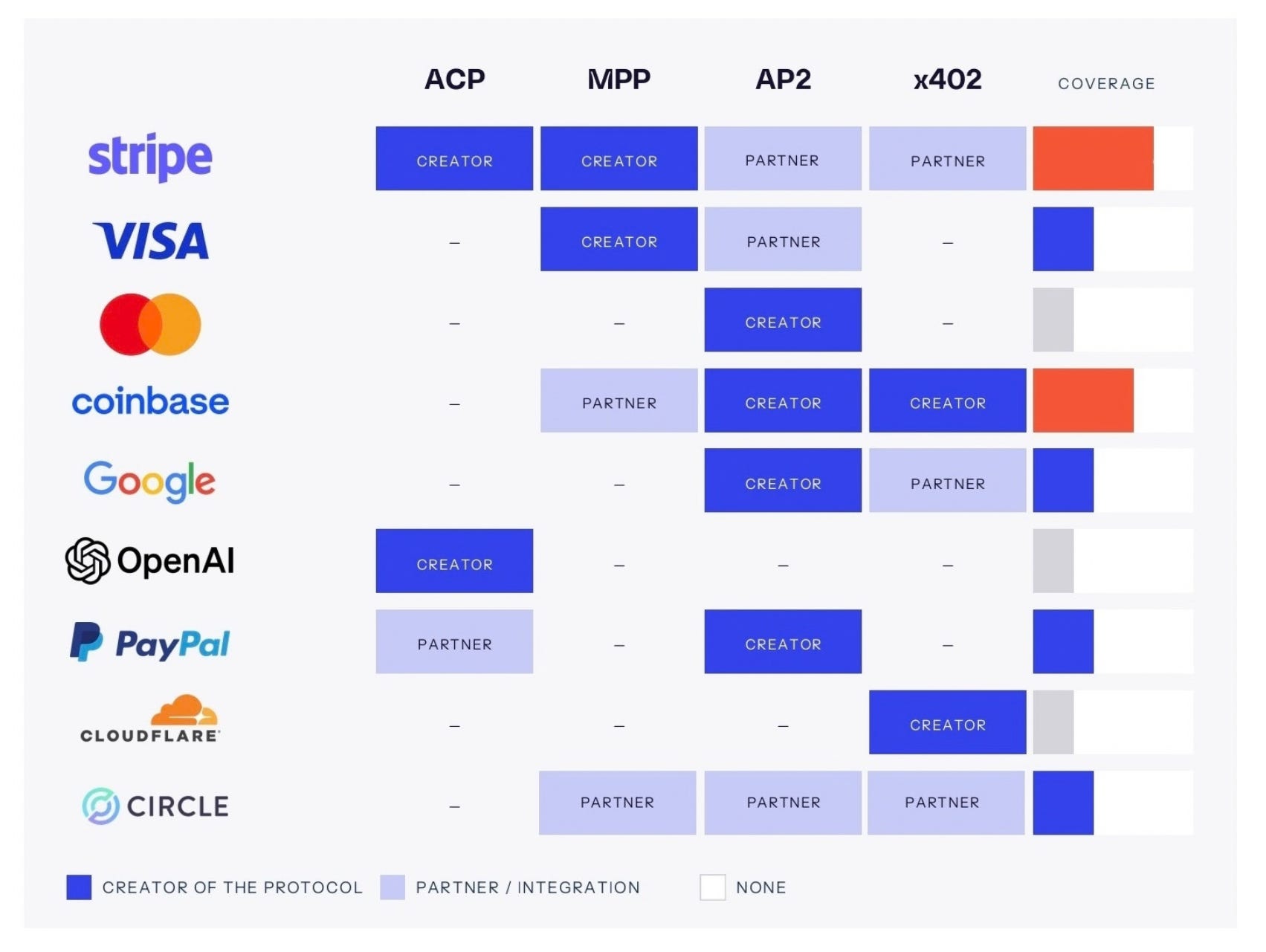
Visa has just closed its strongest year of net revenue growth in more than 15 years, if you strip out the post-pandemic rebound and acquisitions. Fiscal 2026 net revenue came in at $45.9 billion, up 15%, with $12.1 billion in the September quarter alone. Yet when Morgan Stanley’s James Faucette asked whether agentic commerce would show up in the fiscal 2027 numbers, Ryan McInerney did not hedge. “It all remains very small in the big scheme of the enormous size of our business,” he said.
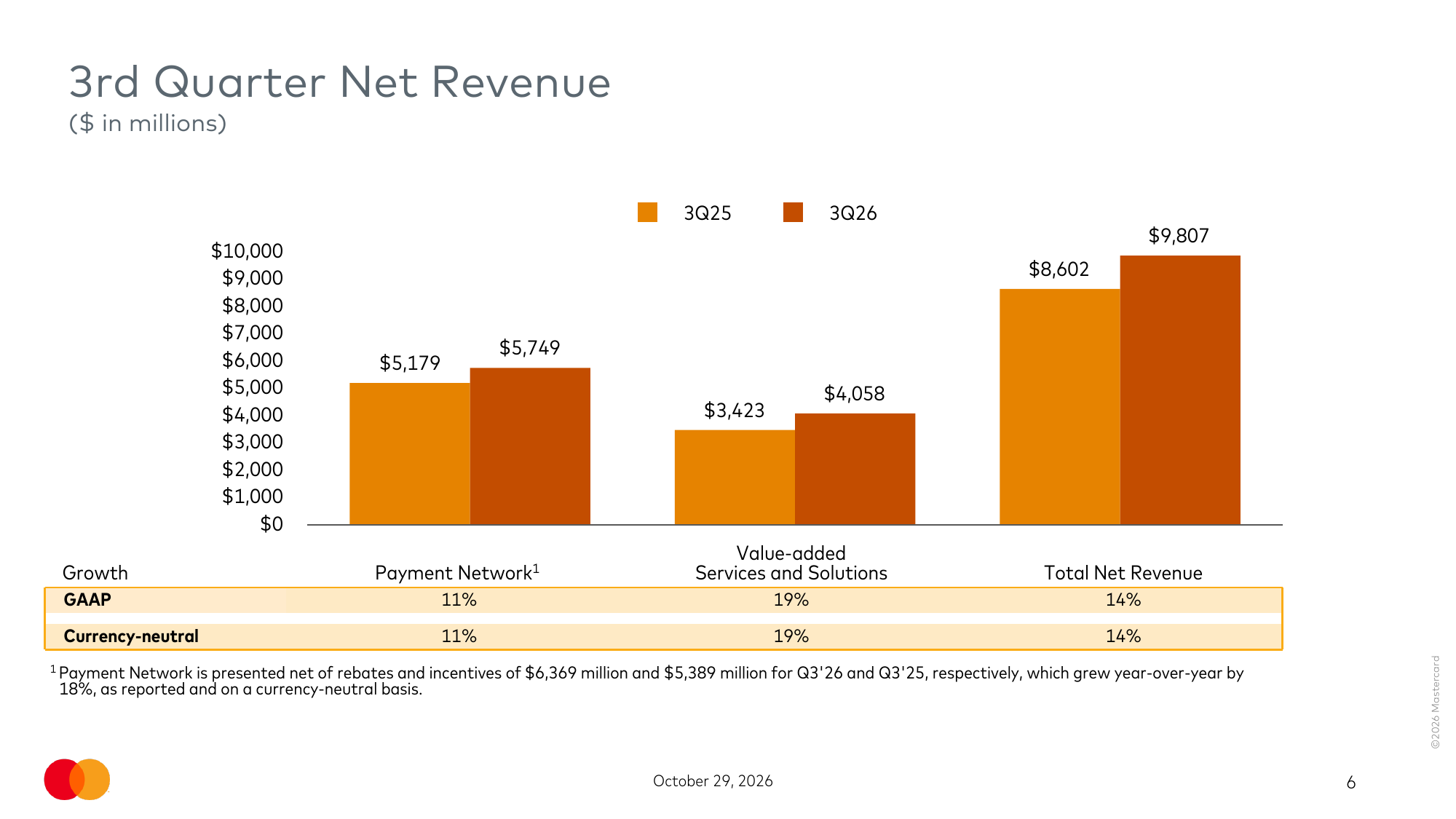
Two days later Mastercard posted $9.8 billion of third quarter net revenue, up 14%, and Michael Miebach gave a near-identical read. Agentic transactions are “ramping up at impressive weekly growth rates,” he said, but “the numbers are not yet significant in the grand scheme.”
Both agree the money comes later. The real subject of both calls was who gets to define a trusted agent transaction before the volume arrives, and there the two are starting to split in ways that matter for anyone building on their rails.
Services growth is paying for the bet
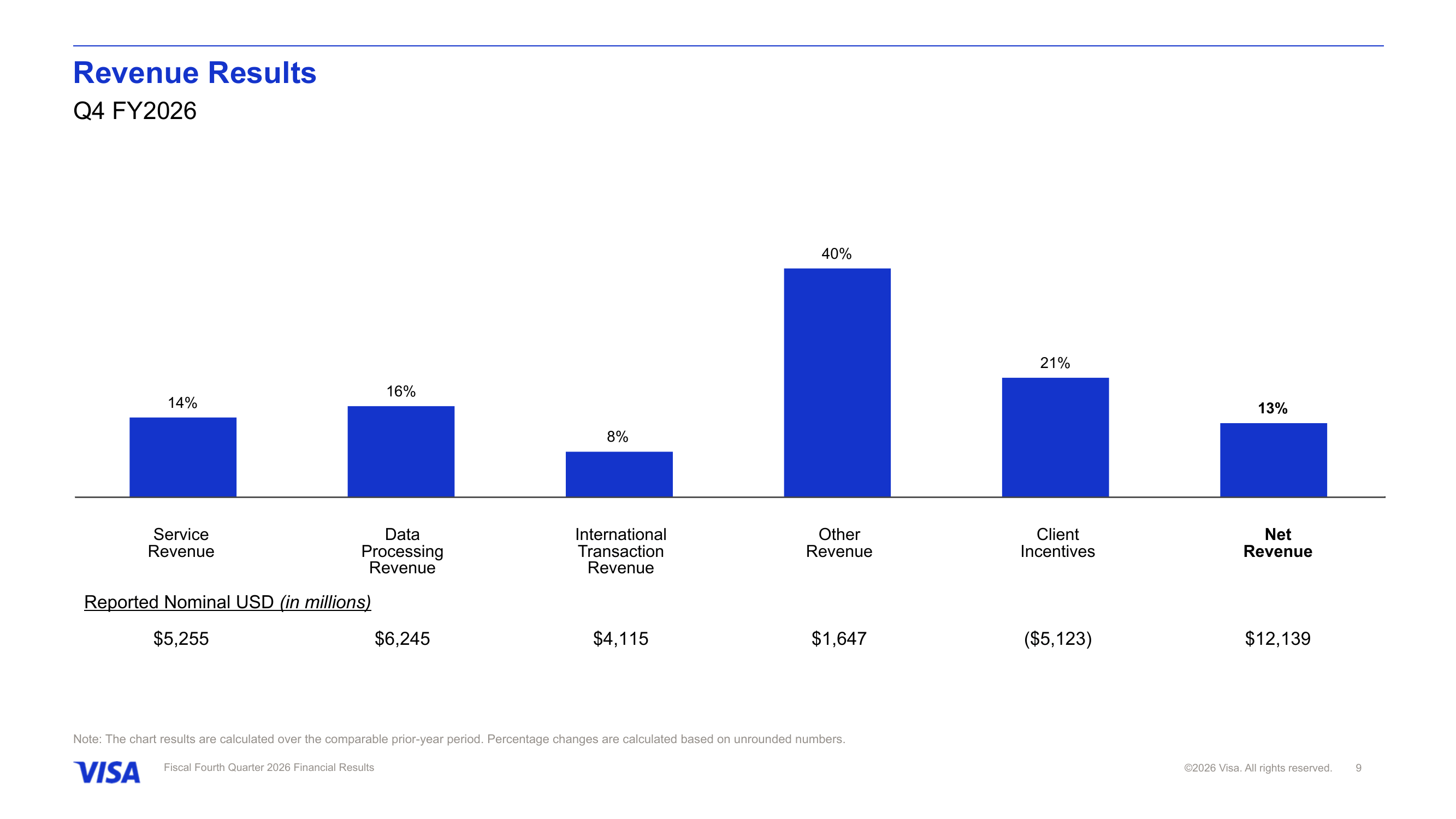
The core numbers explain why neither is in a hurry. Visa’s payments volume grew 9% in constant dollars in the September quarter and cross-border volume excluding intra-Europe rose 14%. Mastercard’s gross dollar volume grew 7%, purchase volume 9% and cross-border volume 11%.
The more telling line sits in services. Visa’s value-added services revenue grew 30% in constant dollars to $14 billion for the year, roughly double its 2023 level, and management is guiding to growth in the low to mid 20s for fiscal 2027. Mastercard’s value-added services and solutions net revenue grew 19% in the quarter, against 11% for its payment network.
That is where agentic money will land first. Asked about pricing, Mastercard CFO Ling Hai pointed to tokens: “we are using MDES as the platform to enhance our token for the agentic world,” and “we will price for the value we deliver.” It means agents will show up in the accounts as higher prices and higher attach rates on tokens, identity checks and fraud scoring, all things the networks already sell, long before anyone reports an agentic fee line.
Visa’s guidance also carries a quieter risk. Around 25% of its payments volume comes up for renewal in fiscal 2027, including several large clients. McInerney said these new agreements are broader and deeper than before, bundling value-added services and money movement products with the core card deal. That bundle is how agentic tools will reach issuers, so banks heading into renewal should know what they are signing up for.
Visa wants its credential everywhere, whoever builds the pipes
McInerney framed Visa’s agentic plan around one line: “In agentic, trust is the biggest barrier to scale.” His fix is equally simple. Every time someone pays or gets paid, it should be with a Visa credential.