

This week’s reports point to a clear shift in banking and fintech: the industry is moving from legacy infrastructure and manual workflows toward real-time, AI-driven, and programmable systems. Across stablecoin payments, agentic banking, and new operating models, the message is consistent — banks that modernize their technology stack, embed automation into execution, and build around trust and compliance will be best positioned to grow. At the same time, Europe’s fintech ecosystem, virtual cards, and rising VC activity show that capital is increasingly flowing toward infrastructure, efficiency, and on-chain finance.
Video of the Week
Deep Dive of the Week
The Emergence of the Bank Operating System

For decades, the financial industry has operated under the assumption that the core banking system is the sun around which all other technologies must orbit. This core-centric model was functional in an era of physical branches and daily batch cycles, but it has become a terminal constraint in the modern digital economy. The core is a monolithic system of record designed for stability over velocity. It was built to store data, not to orchestrate real-time commerce. In my analysis, the gravitational pull of these legacy cores is currently preventing banks from participating in the most lucrative segments of the fintech revolution.
Every modernization strategy over the last twenty years has been a variation of architectural accumulation. Banks add middleware to translate legacy code. They add point solutions to handle specific mobile features. They add third-party Banking as a Service platforms to enable fintech partnerships. The result is a surface-level digital experience that masks an underlying foundation of legacy debt. Smaller institutions that remain release cycle-bound, unable to launch a single feature without their vendor’s permission. Mid-sized banks are struggling with fragmented modernization and integration drag. Large banks are attempting in-house builds that are too expensive and slow to scale. These are different strategies, but they all suffer from the same friction.
What I see now is the formation of a new category: the Bank Operating System. This is a real-time, composable growth layer that repositions strategic control inside the bank. In this model, the core becomes the system of record while the operating system becomes the system of growth. This distinction is foundational. A real-time operating system layer helps banks launch revenue-generating products quickly, activates new payment rails without integration friction, and operates independently of core downtime.

This week’s reports
1️⃣The Agentic Banking Blueprint
2️⃣Technology Trends Redefining Banking
3️⃣State of European FinTech
4️⃣Stablecoin Payments Infrastructure
5️⃣Fintech VC Trends Q1 2026
6️⃣State of Fintech Q1’26 Report
7️⃣Virtual Cards as a Strategic Advantage
The Agentic Banking Blueprint
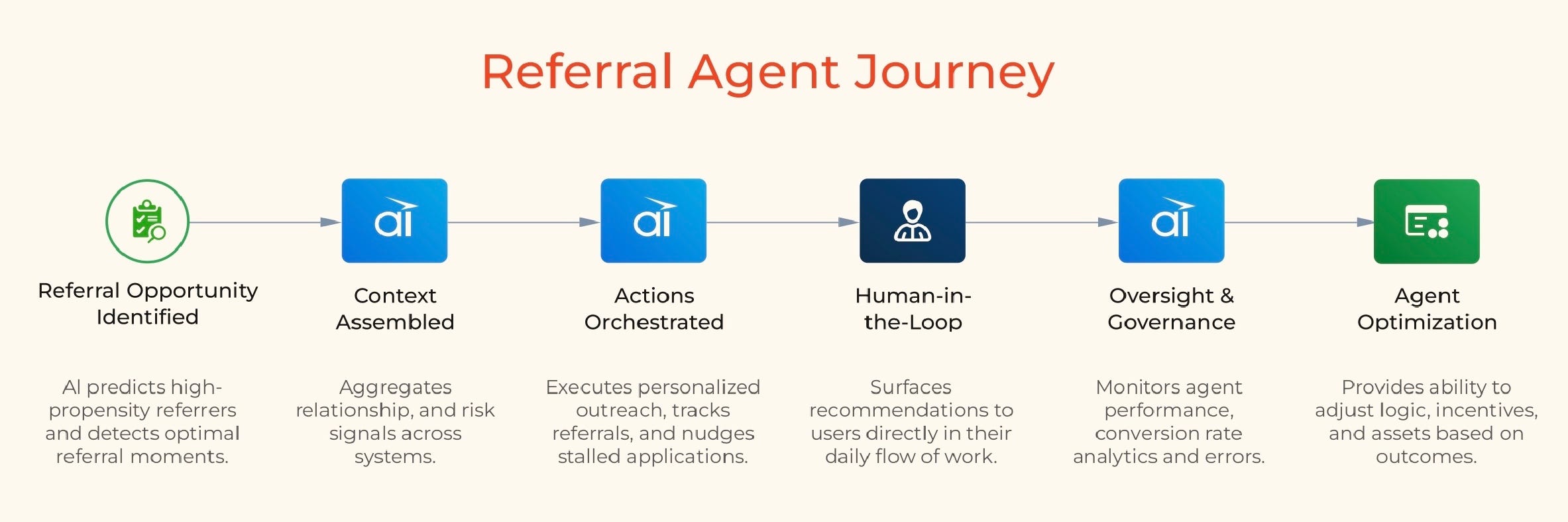
Over the past two decades, most transformation efforts have focused on digitization. Banks invested heavily in systems to capture data, streamline processes, and improve digital customer experiences. More recently, artificial intelligence (AI) has enhanced these efforts by helping employees analyze information, generate insights, and make better decisions.
However, the way work gets done has not changed as much as expected. Most execution still depends on manual coordination across teams, systems, and channels. Even when insights are available, follow-up is often inconsistent. Processes slow down where decisions need to be turned into action.
AI agents address this gap. Unlike traditional AI tools that only provide recommendations, AI agents are designed to take action. These agents can complete defined tasks, follow rules, and move processes forward across systems.
Now, a more advanced model is emerging: autonomous AI agents. These agents represent a new era of intelligent automation; they can learn from data, make decisions within defined objectives, and adapt to real-world conditions. Rather than just executing tasks, they manage outcomes within established guardrails and continuously improve performance over time.