

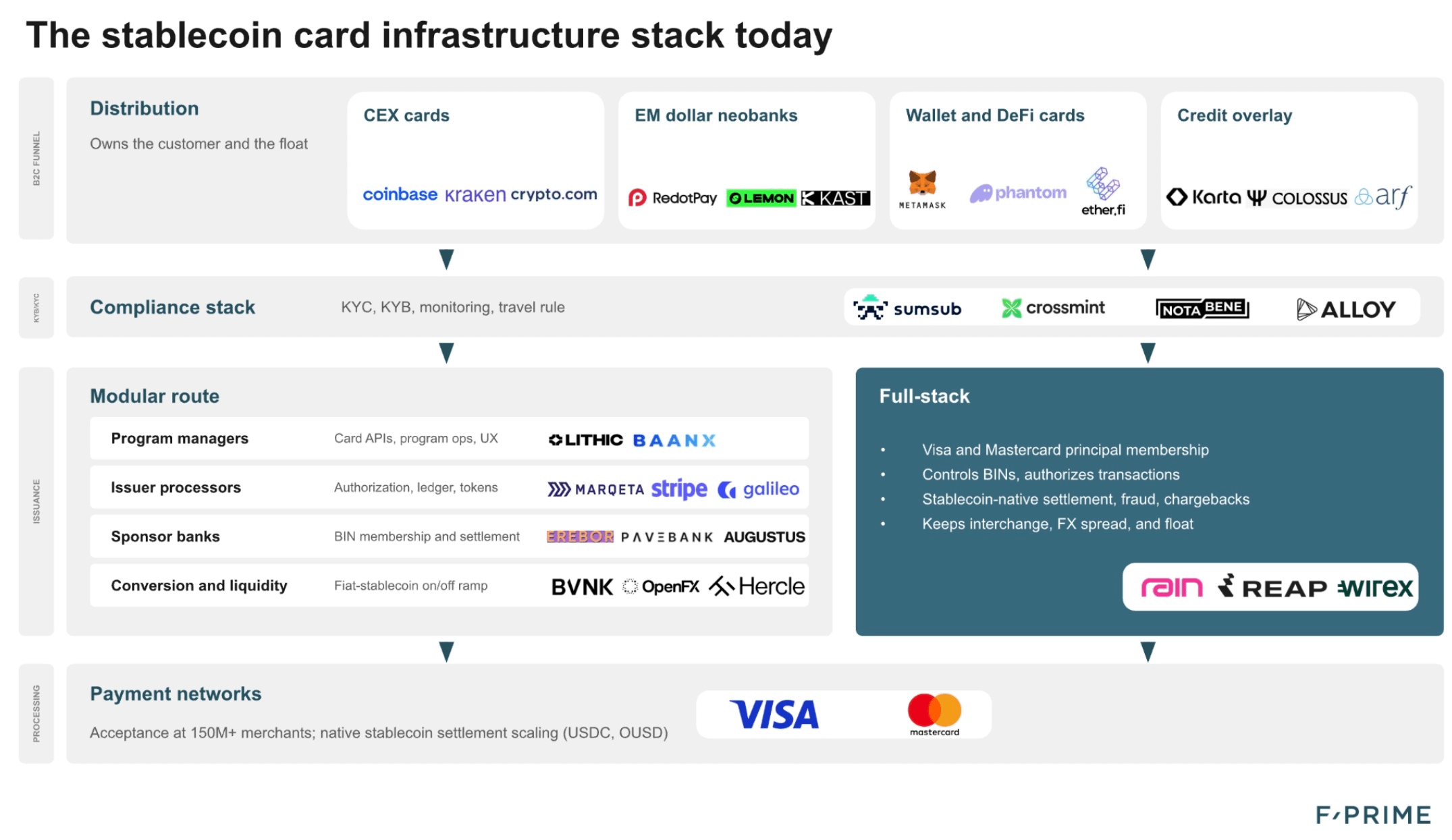
This week’s Fintech Wrap Up explores how AI, stablecoins, and regulatory changes are reshaping financial services. The Evident AI Index reports a 26% increase in banks’ average AI scores, highlighting accelerated adoption but limited disclosure of measurable financial returns. Meanwhile, Europe’s e-invoicing mandates could modernize B2B payments and unlock embedded financing opportunities, while euro stablecoins and stablecoin-linked cards continue expanding digital payment infrastructure. Crypto and traditional finance are also converging through more than $22.8 billion in announced M&A deals since January 2024. Finally, as banks deploy autonomous AI agents, stronger real-time risk monitoring and governance will become essential to managing operational risks.
Video of the Week
Deep Dive of the Week
Personal Agent Protocol and Agentic Commerce

The rapid rise of autonomous artificial intelligence agents acting on behalf of individual consumers has exposed fundamental limitations in traditional web infrastructure. Until recently, consumer AI agents interacted with businesses primarily by emulating human browsing behavior. These software proxies loaded standard web pages, parsed document object models, filled out form fields, and clicked navigation buttons. When web interfaces proved too complex or brittle, agents escalated tasks by dialing customer support call centers or initiating live chat sessions. This browser emulation model introduced severe operational friction. Document object model parsing is fragile, subject to failure whenever a merchant updates its user interface. The resulting interactions suffered from high latency, excessive compute overhead, and high task failure rates.

This week’s reports
1️⃣How Europe’s E-Invoicing Mandates Rewire B2B Payments
2️⃣The state of euro stablecoins in 2026
3️⃣Stablecoin Cards: The Infrastructure Race for the Next $100 Billion
4️⃣AI-powered personalization can help banks create value
5️⃣Evident AI Index for Banks
6️⃣Crypto and TradFi are converging through M&A
7️⃣When Agents Run the Bank
How Europe’s E-Invoicing Mandates Rewire B2B Payments
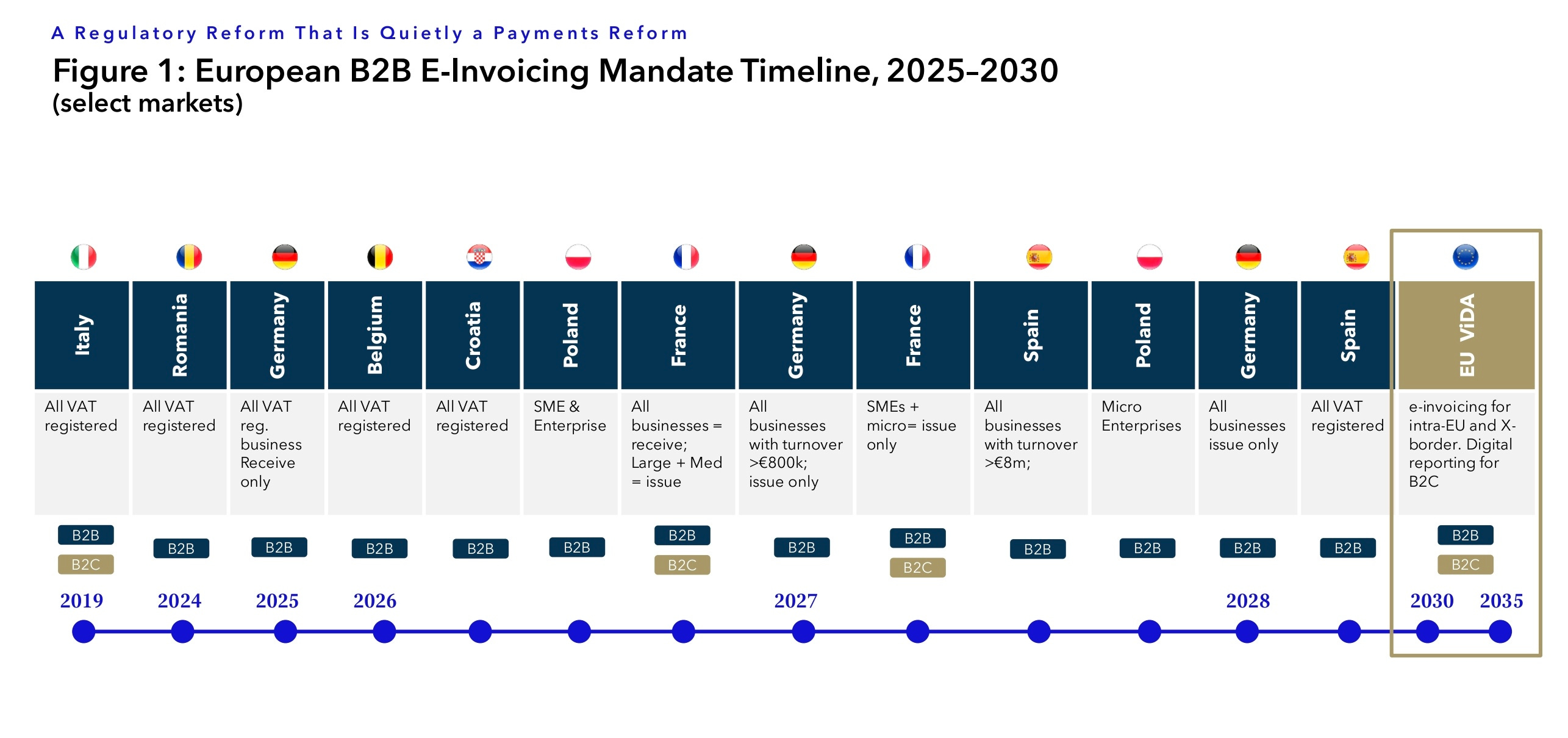
Those who think of Europe’s B2B e-invoicing mandates as just a tax-compliance software upgrade have clearly gotten it wrong. Beyond the compliance burden, these mandates unlock a larger commercial opportunity: making structured, machine-readable transaction data ubiquitous and cost-effective to access. This data layer is also the missing precondition for two propositions that have been stuck at the margins of European B2B payments for decades: commercial card acceptance on the supplier side, and fintech-led working-capital financing embedded in CFO office platforms.
A Regulatory Reform That Is Quietly a Payments Reform
The European invoice is being digitized, and key regulations are underway. ViDA (VAT in the Digital Age) entered into force with mandatory e-invoicing and near-real-time digital reporting for intra-EU B2B transactions (applicable from July 2030). National B2B e-invoicing mandates are well underway, dematerializing paper invoices and standardizing the e-invoice format and transportation interface. For example, Belgium went live with mandatory domestic B2B structured e-invoicing on 1 January 2026. Poland’s KSeF clearance model captured large taxpayers on 1 February 2026 and essentially everyone else on 1 April 2026. France begins its phased rollout on 1 September 2026.
These regulations standardize both the content and the transport of every B2B invoice simultaneously: