

The rapid rise of autonomous artificial intelligence agents acting on behalf of individual consumers has exposed fundamental limitations in traditional web infrastructure. Until recently, consumer AI agents interacted with businesses primarily by emulating human browsing behavior. These software proxies loaded standard web pages, parsed document object models, filled out form fields, and clicked navigation buttons. When web interfaces proved too complex or brittle, agents escalated tasks by dialing customer support call centers or initiating live chat sessions. This browser emulation model introduced severe operational friction. Document object model parsing is fragile, subject to failure whenever a merchant updates its user interface. The resulting interactions suffered from high latency, excessive compute overhead, and high task failure rates.
For merchants, autonomous agents operating through standard web browsers created an acute visibility crisis. Security systems and web application firewalls could not reliably distinguish a legitimate consumer agent performing a routine balance inquiry from a malicious web scraper, an automated attack script, or a credential stuffing bot. Consequently, businesses faced a binary choice between blocking non human traffic at the edge or exposing customer facing interfaces to unmitigated operational and security risks.
What brought us to open standards
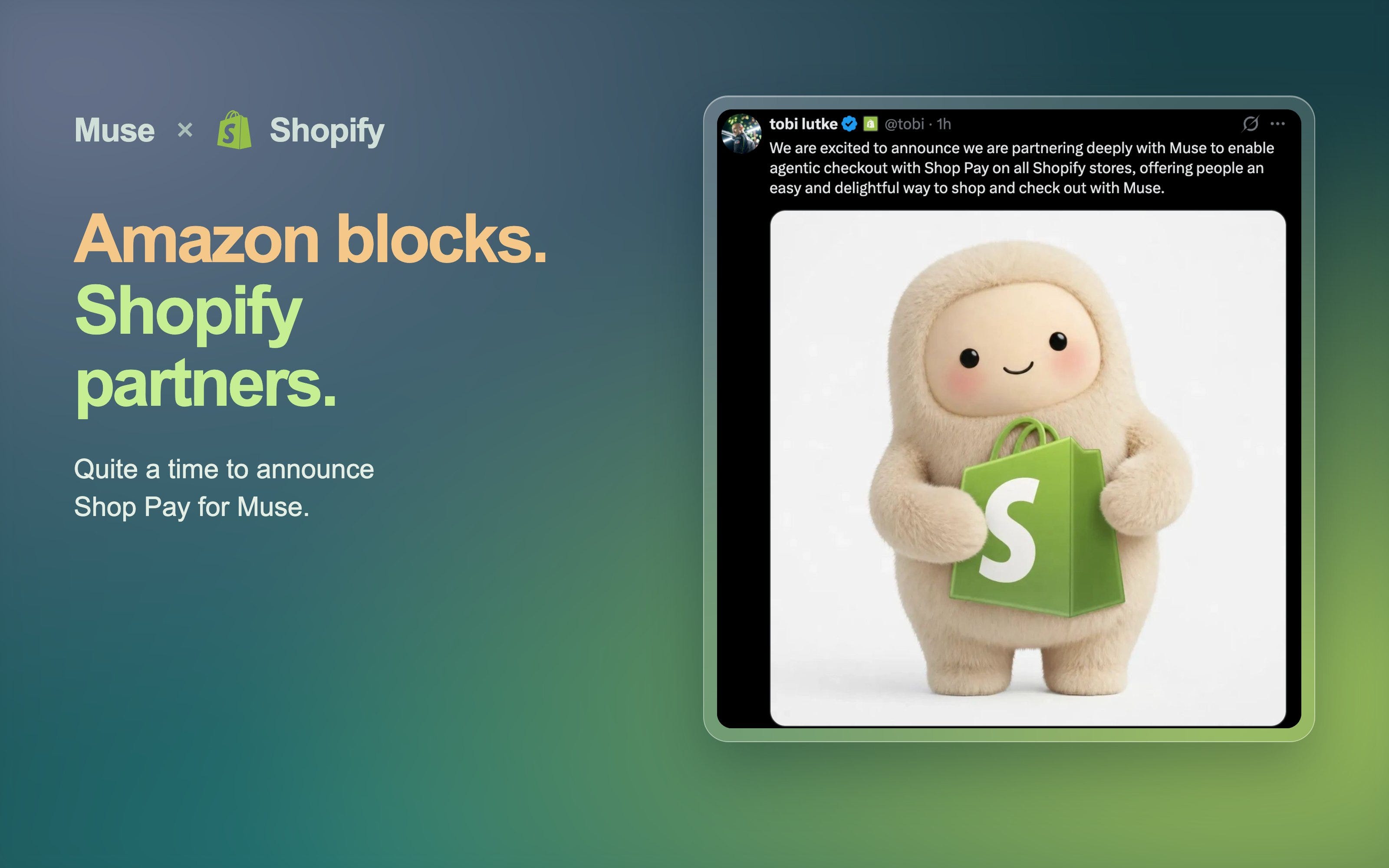
The friction between consumer agents and enterprise infrastructure escalated rapidly in late 2026. Meta launched its personal AI agent, Muse, on September 8, 2026, achieving rapid consumer adoption and topping mobile app store charts within days. Designed to navigate websites, book travel, negotiate bills, and execute retail transactions, Muse operated directly across public merchant interfaces. On September 21, 2026, twelve days after launch, Amazon actively blocked Muse from accessing its retail platform, halting automated shopping tasks. This public collision underscored a core reality: digital commerce platforms cannot support millions of persistent, high-frequency AI agents operating through unauthenticated front-door web browsers. Market momentum accelerated further as everyday assistant startup Instinct saw its valuation quadruple to ten billion dollars, OpenAI launched its task-oriented agent suite Dots, and Hark released software designed to execute household purchasing tasks.
To resolve this systemic standoff, Sierra and Meta introduced the Personal Agent Protocol (PAP) on October 6, 2026. Co-developed alongside an initial coalition of enterprise, payments, and retail leaders, including Genesys, Instinct, Rocket Companies, Shopify, Stripe, and Walmart, the protocol establishes an open communication standard for consumer-to-business agent interactions. The initiative replaces unstructured web scraping with standard authorization, identity signaling, and structured task delegation.