

Video of the Week
Deep Dive of the Week
Agentic AI in Financial Crime Fighting

The global financial system is facing a structural crisis. In 2025, illicit financial activity surged to an estimated $4.4 trillion, a figure that represents a $1.3 trillion increase over just two years. This 19.2% compound annual growth rate indicates that financial crime is not merely increasing; it is industrializing. This surge means legacy compliance models are failing. Traditional rule-based systems and manual human review are mathematically incapable of keeping pace with adversarial AI.
The industry currently operates in a state of high-cost inefficiency. Banks commonly allocate 10% to 15% of their total headcount to Know Your Customer (KYC) and Anti-Money Laundering (AML) activities, yet they detect only about 2% of global financial crime flows. This delta between operational spend and effectiveness is the “compliance trap.” I believe agentic AI is the only credible exit strategy for this trap.
Agentic AI represents a shift from “assistive” technology to “autonomous” execution. While generative AI (GenAI) summarizes data and analytical AI identifies patterns, agentic AI has the capacity to plan, execute, and adapt sequences of actions to reach a specific objective. It is the difference between a chatbot that writes a summary and a digital worker that investigates a case.

This week’s reports

1️⃣Stablecoins Are Becoming a New Settlement Rail in Global Payments
2️⃣Agentic Commerce Is Changing the Structure of Retail
3️⃣Stablecoin Payments: The Volume Illusion
4️⃣Tokenization’s Real Bottleneck: Interoperability in Digital Capital Markets
5️⃣Crypto taxation is no longer fragmented experimentation
6️⃣Stablecoins are becoming domestic payment infrastructure
7️⃣Tokenized stocks transition layer
This week’s insights
1️⃣The Tokenised Money Framework
2️⃣When AI agents start shopping, who’s responsible for the chargeback?
3️⃣European Banks Prepare for Tokenized Finance
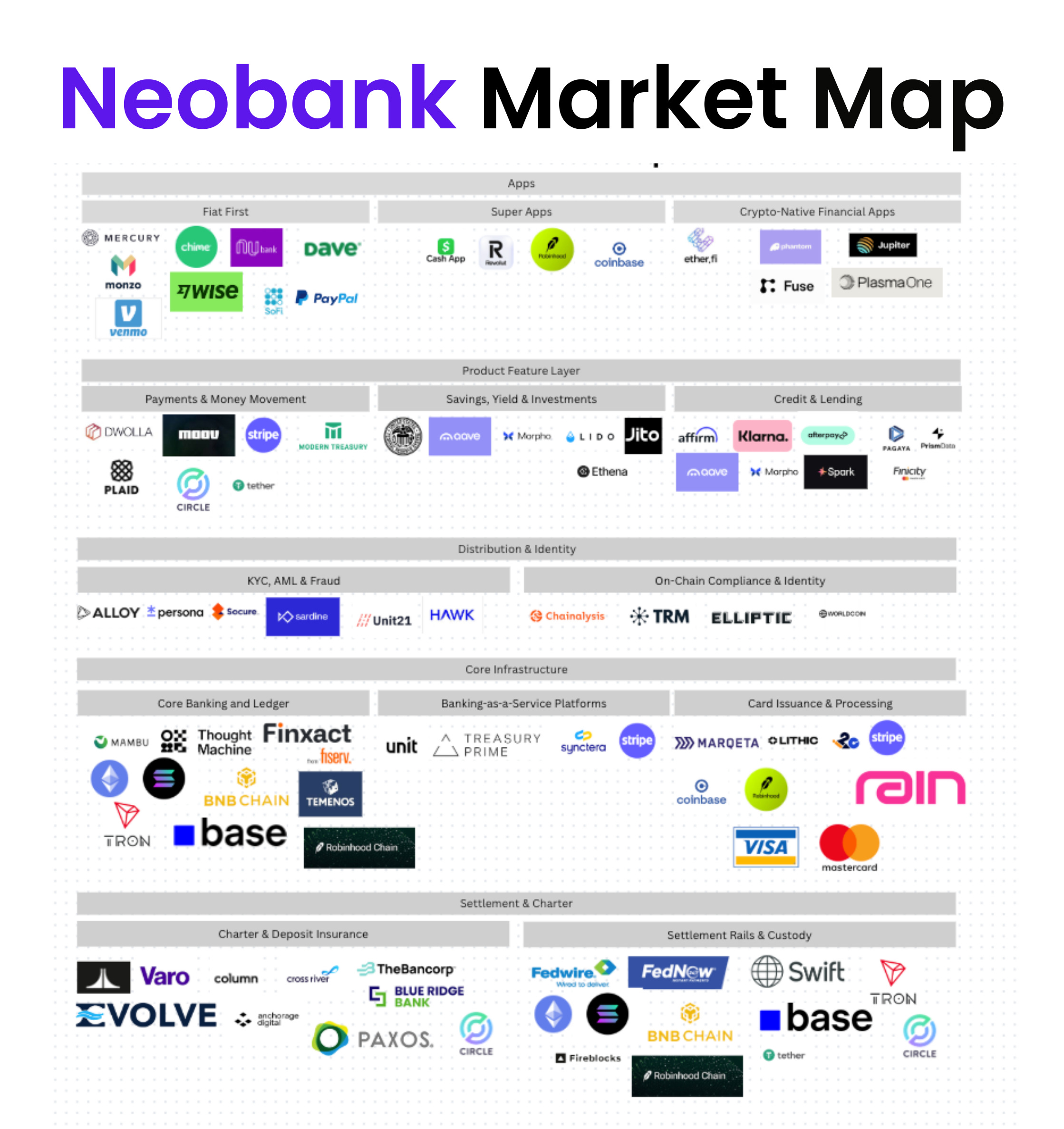
4️⃣Neobank Market Map by Artemis
5️⃣Big crypto is coming for big banking
6️⃣The stablecoin infrastructure framework
7️⃣How Tokenization Is Evolving for Autonomous Payments
The Tokenised Money Framework
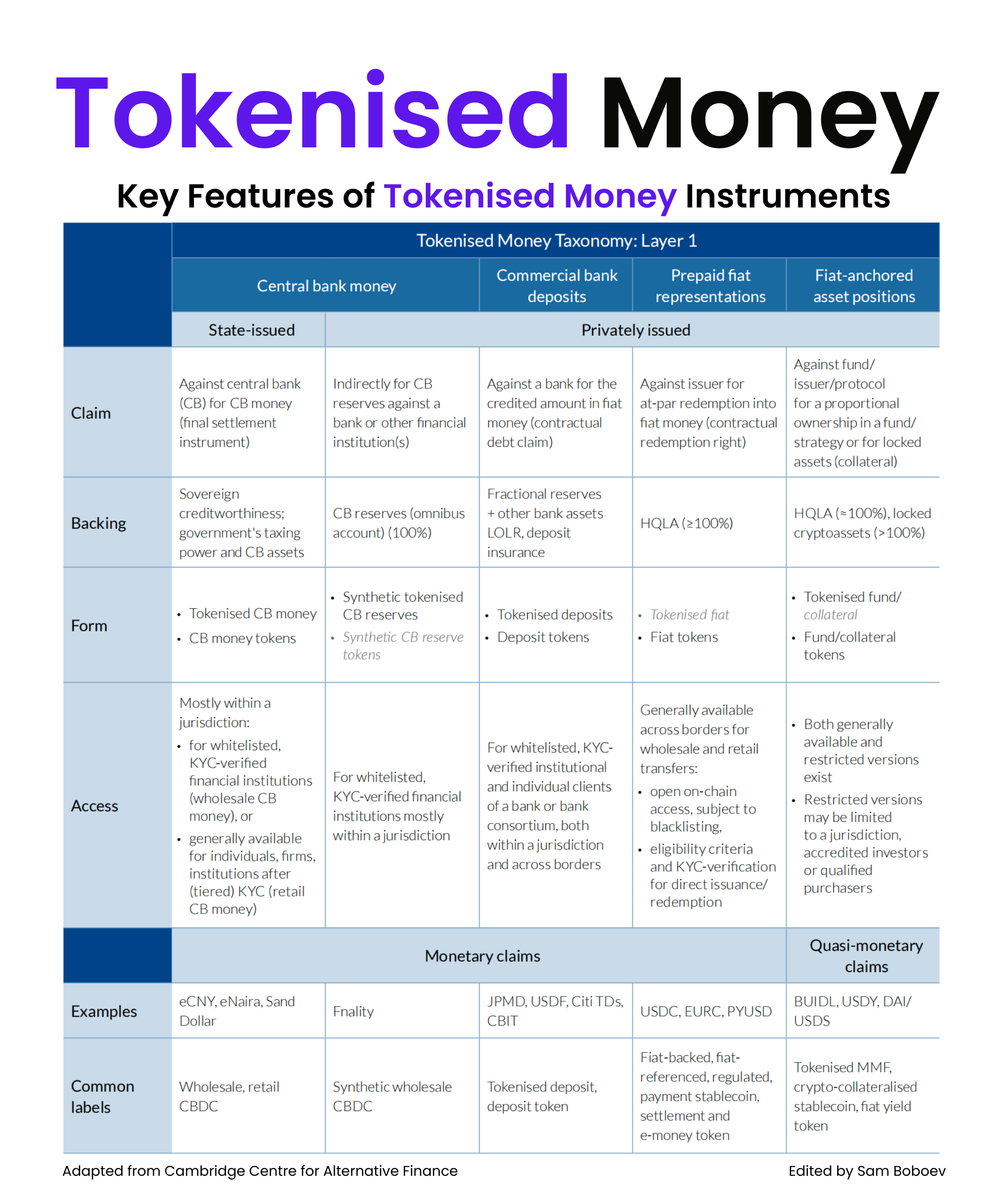
As monetary instruments move onto distributed ledgers, multiple classification attempts have emerged. No widely accepted taxonomy exists. Different actors define these instruments through different lenses:
- Policymakers classify them through regulatory frameworks and legal claims.
- Financial institutions focus on functional form deposit tokens, tokenised deposits, programmability, and settlement use cases.
- Crypto-native actors classify them by reserve structures and market adoption patterns.
This fragmentation complicates comparisons across instruments and weakens analysis of their performance against the three functions of money: unit of account, medium of exchange, and store of value. It also complicates regulatory discussions.
A two-layer taxonomy addresses this gap. The framework defines instruments based on the underlying claim and maps the design features that determine functionality.
Tokenised money refers to DLT-based claims referencing fiat money used for payments or value storage. The definition also includes quasi-monetary claims that perform monetary functions under certain conditions and may represent proportional claims on underlying assets rather than guaranteed par redemption.
____
The first layer classifies instruments across four dimensions: