

The reports highlight a major shift in financial infrastructure driven by agentic AI, stablecoins, and automation. Payments are moving from human led actions to agent executed transactions across three flows: human to agent, agent to business, and agent to agent. This shift introduces new challenges around authorization, trust, and liability.
Stablecoins are also evolving into core financial rails. Most activity is now focused on B2B payments, liquidity management, and cross border settlement. The market is consolidating around compliant and institution friendly players, positioning stablecoins as foundational infrastructure rather than speculative assets.
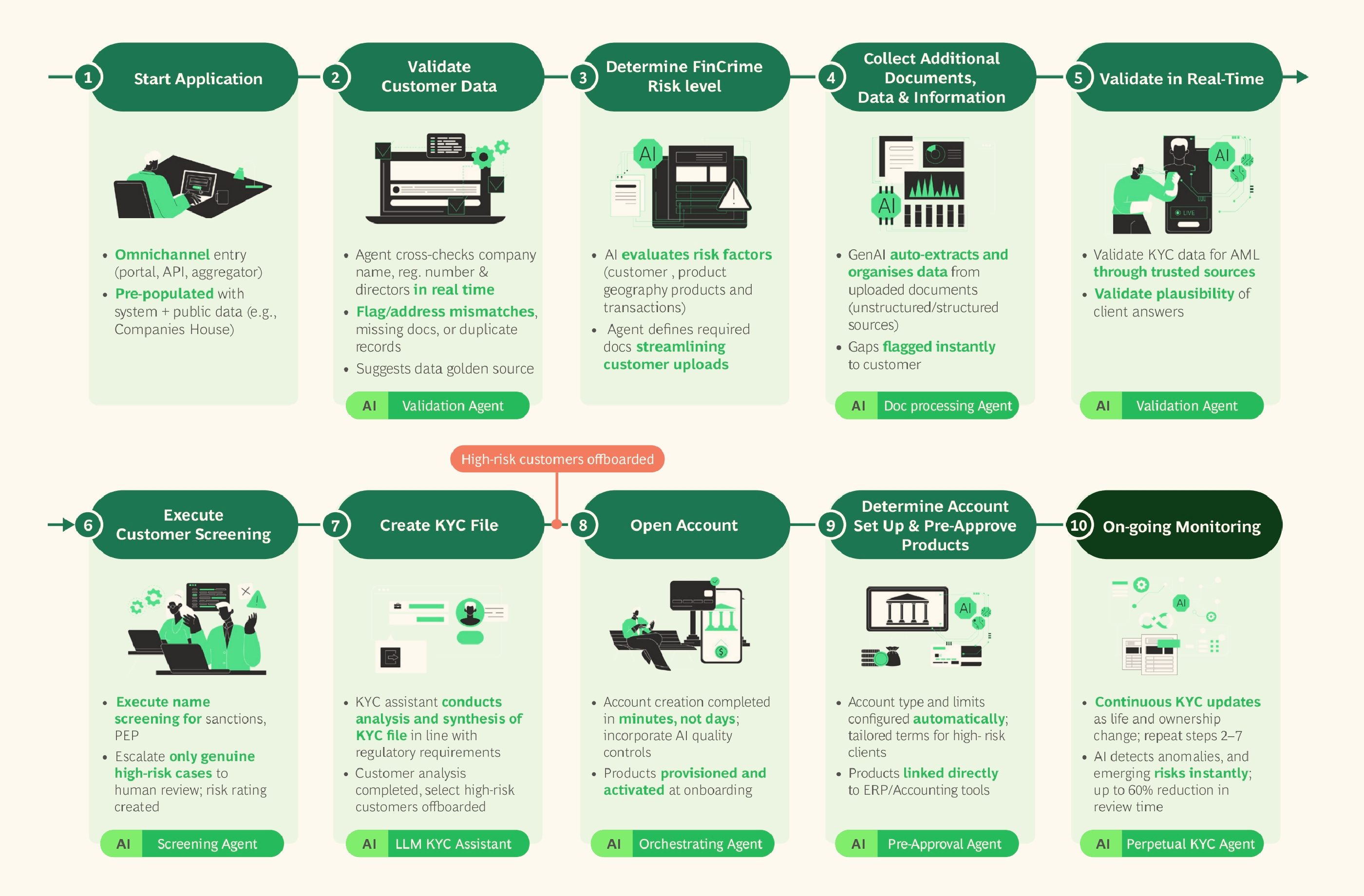
In banking, agentic AI is transforming KYC from a manual and costly process into a more automated system where AI handles routine tasks and humans focus on exceptions. This can significantly improve efficiency and reduce costs.
Overall, financial systems are becoming more automated and interoperable, with AI agents and programmable money reshaping how transactions are initiated, processed, and governed.
Video of the Week
Deep Dive of the Week
The Ultimate Directory of Agentic Commerce and Payment Protocols / Tools

What this directory covers
“Agentic commerce” is a shift from human-operated checkout (clicking “Buy”) to software agents that discover, negotiate, and transact on a user’s behalf often across multiple systems, surfaces, and payment methods. Multiple initiatives are trying to prevent this ecosystem from fragmenting into one-off integrations by defining shared languages, primitives, and trust/authorization artifacts.
This directory treats “protocol” broadly as any standardized interface that enables interoperable agent-led commerce, including:
Commerce/checkout standards (how agents and merchants coordinate carts, checkout, order lifecycle).
Payments authorization and audit standards (how intent, consent, and accountability become cryptographically provable).
Trust and traffic authenticity mechanisms (how merchants distinguish trusted commerce agents from malicious automation).
Agent tooling surfaces (MCP servers, SDKs, toolkits) that make these protocols practical to implement.

This week’s reports
1️⃣The Shift to Agentic Payments
2️⃣The Definitive Stablecoin Landscape Series
3️⃣Case study - Klarna
4️⃣The Know-Your-Customer Agentic AI Revolution
5️⃣The $340 Million Case for Tokenized Collateral
6️⃣How Revolut Built PRAGMA, an AI Foundation Model
7️⃣The Global Payments Report 2026
The Shift to Agentic Payments
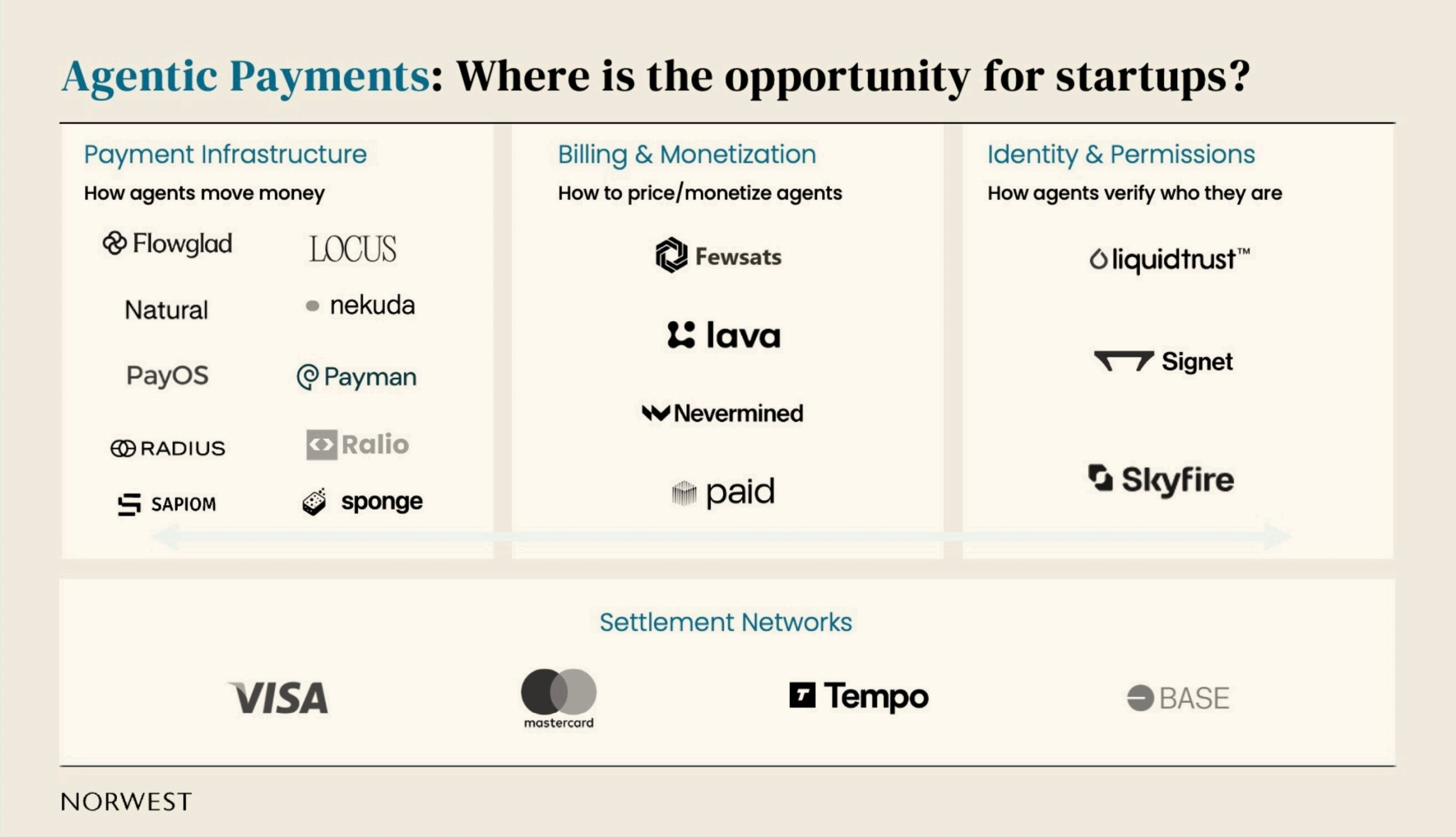
Commerce is evolving through a sequence that is familiar across many technology cycles.
Initially, humans transacted directly with each other. Eventually, software embedded payments inside applications and digital products. Now, agents are becoming the actors that decide when and how transactions occur.
That shift creates three distinct emerging payment flows:
-> Human-to-agent. A person delegates authority to an agent within defined constraints. For example, an AI assistant books travel within a budget, renews subscriptions, or completes routine purchases on a user’s behalf. In these cases the core challenge is safe delegation, where systems must determine who authorized the action, what spending limits apply, and where liability sits when software acts on behalf of a user.
-> Agent-to-business. Agents interact directly with merchants, vendors, or APIs without a human involved in the transaction itself. This could be an AI agent purchasing compute from a cloud provider, paying for an API request, or ordering supplies within an enterprise procurement system. In these cases payments become part of the operational workflow rather than a checkout step.