

This week’s Fintech Wrap Up highlights how AI, stablecoins, and modern payment infrastructure are reshaping financial services. AI agents are increasingly taking over payment decisions based on consumer preferences, while stablecoins are gaining traction—particularly for faster, cheaper cross-border payments and AI-enabled financial services. Fintech investment slowed in Q2 2026, with fewer but larger deals, while digital banking funding surged. Meanwhile, banks face growing pressure to replace costly legacy payment systems with agile, API- and cloud-based infrastructure. The report also emphasizes the rise of agentic commerce, where businesses must increasingly optimize not only for human customers but also for AI agents, and highlights JPMorgan’s integrated strategy spanning treasury services, embedded finance, trade finance, merchant services, and digital payment solutions.
Video of the Week
Deep Dive of the Week
When financial institutions should build their own transaction foundation models

Banks and payment companies are changing how they use artificial intelligence. For years, they used separate tools and manual coding to handle tasks like spotting fraud, checking credit scores, and sorting purchases. Building and updating these old systems required a lot of extra work and repeated effort.
Now, companies are switching to larger, unified AI models. Instead of looking at transactions one by one, these new models look at the entire stream of a customer’s activity to understand patterns over time. Financial companies now have to decide if they should build these modern AI tools themselves, buy them from other software providers, or keep tweaking their older, specialized systems.

This week’s reports
1️⃣If AI agents transact autonomously, who controls checkout, payment choice, and loyalty?
2️⃣How Financial Services Leaders Approach The Stablecoin Evolution
3️⃣State of Fintech
4️⃣McKinsey on Finance
5️⃣The Legacy Exit Strategy for Payment Modernization
6️⃣Agentic Commerce: Market to People, Sell to Software
7️⃣Let me break down JPMorganChase’s payment strategy
If AI agents transact autonomously, who controls checkout, payment choice, and loyalty
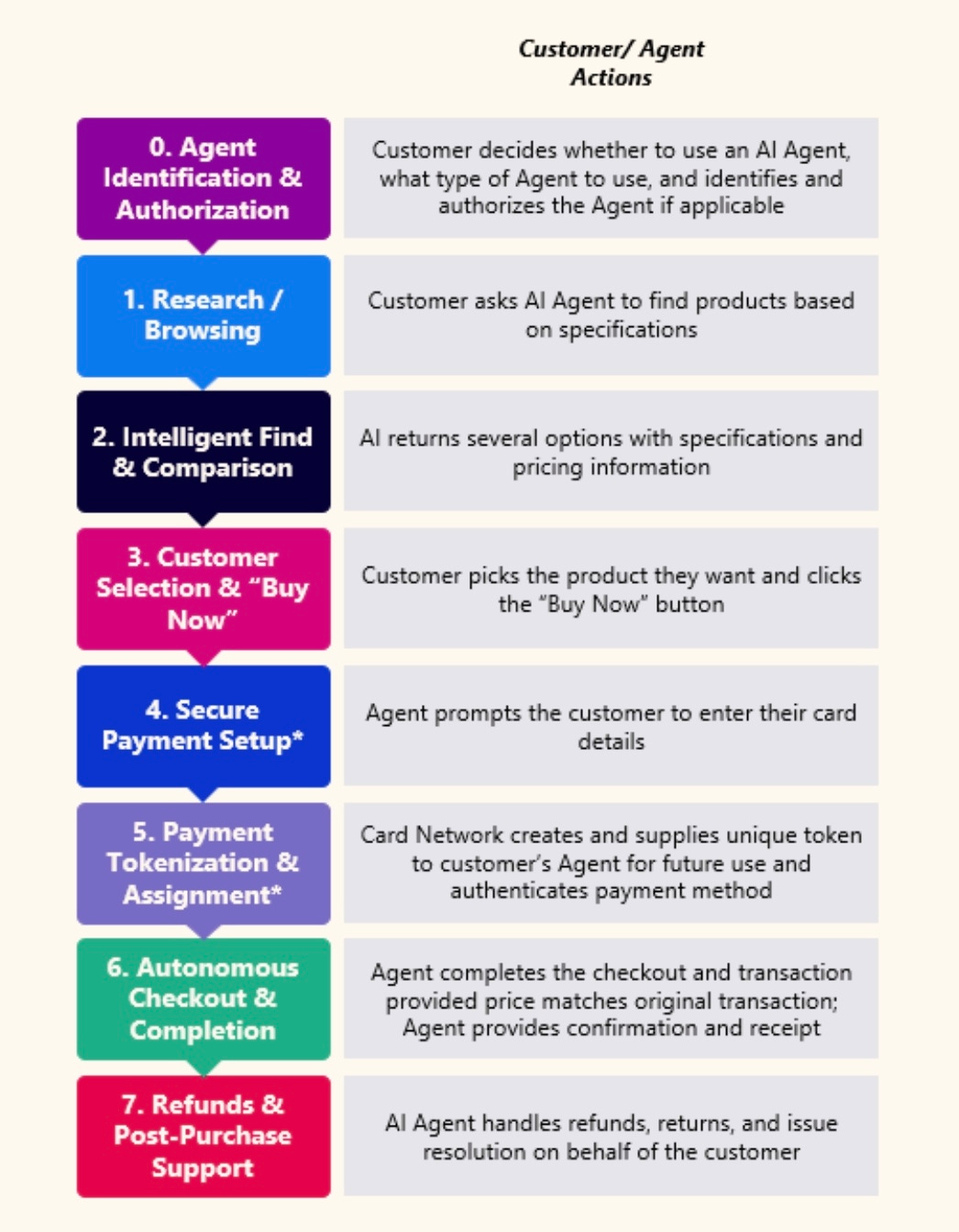
In traditional e-Commerce, the human shopper makes the decision on which payment method to select based on the options presented by the merchant. Here, the merchant has an element of power to “steer” the consumer towards a certain choice, for example, by offering discounts or pre-selecting a default choice. In the agentic commerce model, the AI agent increasingly acts as the primary decision-maker, choosing the most-preferred payment method that both reflects the consumer’s instructions and is accepted by the merchant.
The consumer will typically specify the following criteria when it comes to the most-preferred payment method:
-Total cost to the consumer
-Available discounts
-Loyalty benefits
It is then up to the agent to pick the payment method that most closely aligns with the specifications above, within the constraints of what the merchant makes available. Over time, with the user’s permission, the agent can also use transaction history data to learn which payment methods are used more in certain contexts and refine the recommendations accordingly.