


This week’s reports explore how AI agents are reshaping finance and commerce. Building An AI-Ready Finance Function explains that finance teams are moving beyond using AI for automation toward building AI-driven workflows and real-time decision support, though fragmented data and skills gaps remain major barriers. Agentic Payments from the Ground Up examines the rise of machine-to-machine payments, arguing that AI agents and low-cost blockchain infrastructure are making micropayments economically viable for the first time, enabling autonomous software transactions. Agentic Commerce: Who Gets To Transact looks at the emerging infrastructure needed for AI agents to complete purchases independently, highlighting that future success depends not only on payment technology but also on solving challenges around identity, settlement, governance, and liability as autonomous commerce becomes more widespread.
Video of the Week
Deep Dive of the Week
The EU and UK Expense/Spend Management Companies Directory

I built a structural map of the spend management category because the space has quietly split into distinct business models that get lumped together under one label. Some of these companies are regulated e-money institutions issuing their own cards. Others are pure software layers that never touch a BIN. This guide breaks down 22 platforms across five segments, with license type, card networks, card types, features, and regional coverage for each. I also built a companion Excel file with the full dataset so you can filter and compare without scrolling through prose.

This week’s reports
1️⃣Fast Payment Systems as Macroeconomic Infrastructures
2️⃣Agentic AI and the future of B2B payments
3️⃣From AI promise to AI performance
4️⃣Stablecoins: Transforming the Financial Landscape
5️⃣Building An AI-Ready Finance Function
6️⃣Agentic Payments from the Ground Up
7️⃣Agentic Commerce: Who Gets To Transact
Fast Payment Systems as Macroeconomic Infrastructures
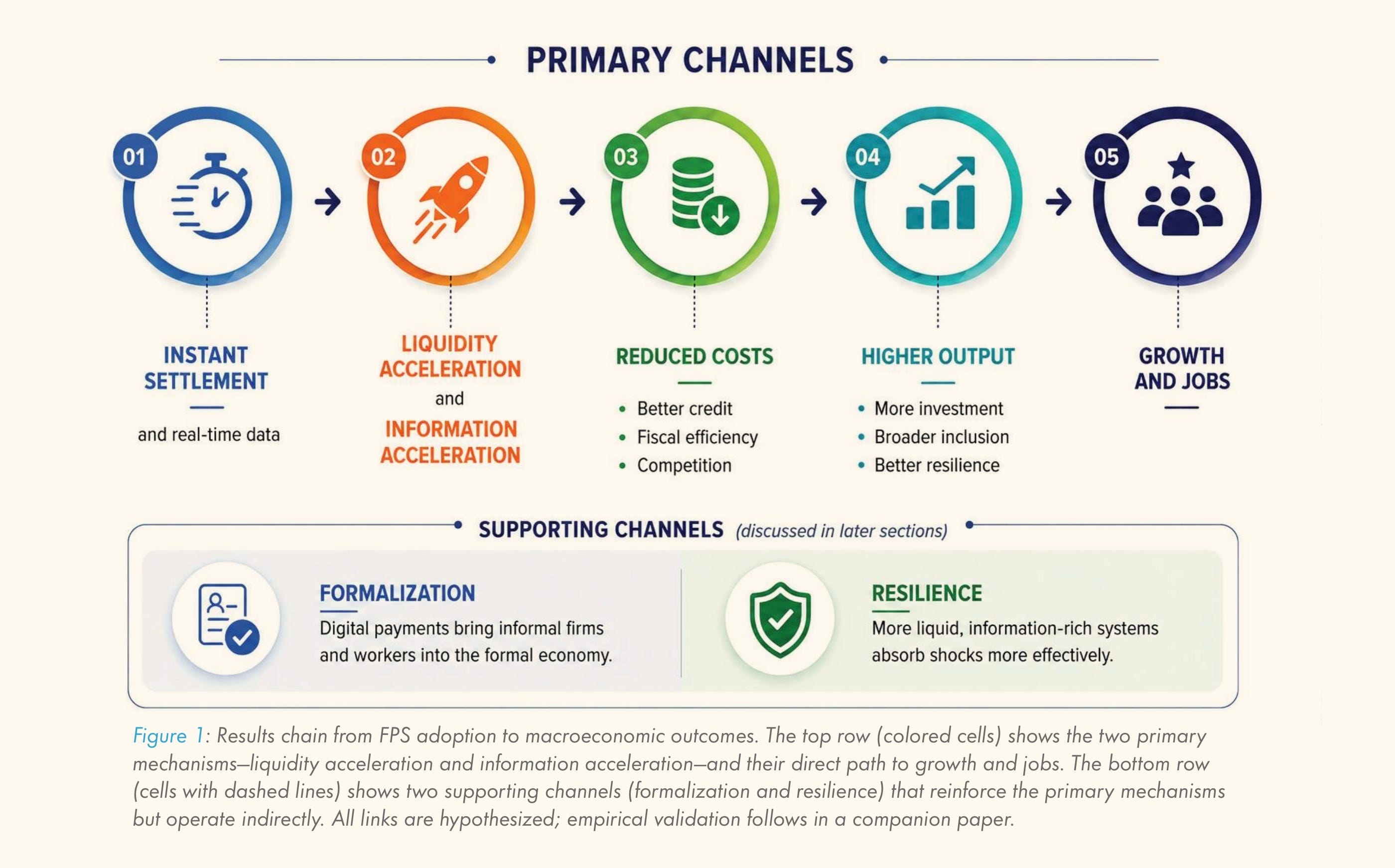
Fast payment systems—platforms that settle money transfers within seconds, around the clock—are spreading rapidly across the world. More than 100 countries now operate or are building such systems. Brazil’s Pix, India’s Unified Payments Interface, and similar platforms in the European Union, the United Kingdom, Singapore, and many emerging markets are already handling billions of transactions each year. This paper asks whether that shift in how payments work could also shift how economies perform.
The short answer, as a hypothesis supported by a growing body of indirect evidence, is yes, but only under the right conditions, and the magnitude of the effect is still to be measured. This paper does not claim that fast payment systems have already been proven to raise growth and employment. Its purpose is more modest: to explain why fast payments may matter for the wider economy, through which channels they may operate, and what conditions must be in place for their benefits to materialize. Some of the supporting evidence comes directly from experiences with fast payment systems; some comes from related areas such as digital payments, mobile money, open banking, and fintech credit. A companion empirical paper will test these channels more directly
The Central Hypothesis
Fast payment systems may act as macroeconomic infrastructure—not just a faster way to pay—by simultaneously accelerating the following two fundamental flows that underpin economic activity:
• Money circulation: By settling payments in seconds rather than days, fast payment systems reduce the time that funds sit idle in the payment pipeline. Money becomes usable sooner, reducing the need for households, firms, and banks to keep extra liquidity idle as a precaution.
• Economic information: Real-time, structured transaction records make economic activity more visible and verifiable. Lenders can see a borrower’s actual cash flows, governments can monitor tax compliance, and regulators can spot risks earlier.
These flows are called liquidity acceleration and information acceleration—the two pillars of this paper’s framework.
What the Paper Argues