

The financial infrastructure of the internet is being re-architected. On March 18, 2026, the launch of the Machine Payments Protocol (MPP) and the Tempo mainnet signaled the possible end of the human-centric checkout era. Actually, this could be a fundamental shift in how value moves across the web. For thirty years, the internet lacked a native value layer, forcing the industry to build increasingly complex user interfaces around legacy credit card rails. These interfaces, designed for human psychology, have become the primary bottleneck for the emerging agentic economy.
I believe the fundamental friction of the modern web is the “human-in-the-loop” requirement for commerce. AI agents do not use browsers. They do not click buttons, they do not solve CAPTCHAs, and they do not possess the cognitive friction that leads to cart abandonment. When an AI agent requires a resource, payment is a programmatic prerequisite for task completion; it is not a psychological preference. The Machine Payments Protocol, co-authored by Stripe and Tempo Labs, formalizes this reality by reviving the HTTP 402 “Payment Required” status code into a standardized, machine-readable challenge-response framework.
The failure of human-centric micropayments
There are three generations of failure in the micropayments graveyard. Every previous attempt failed because the assumed payer was a person. Humans calculate mental transaction costs for even the smallest payments. This leads to a hesitation that breaks the economics of digital content and services.
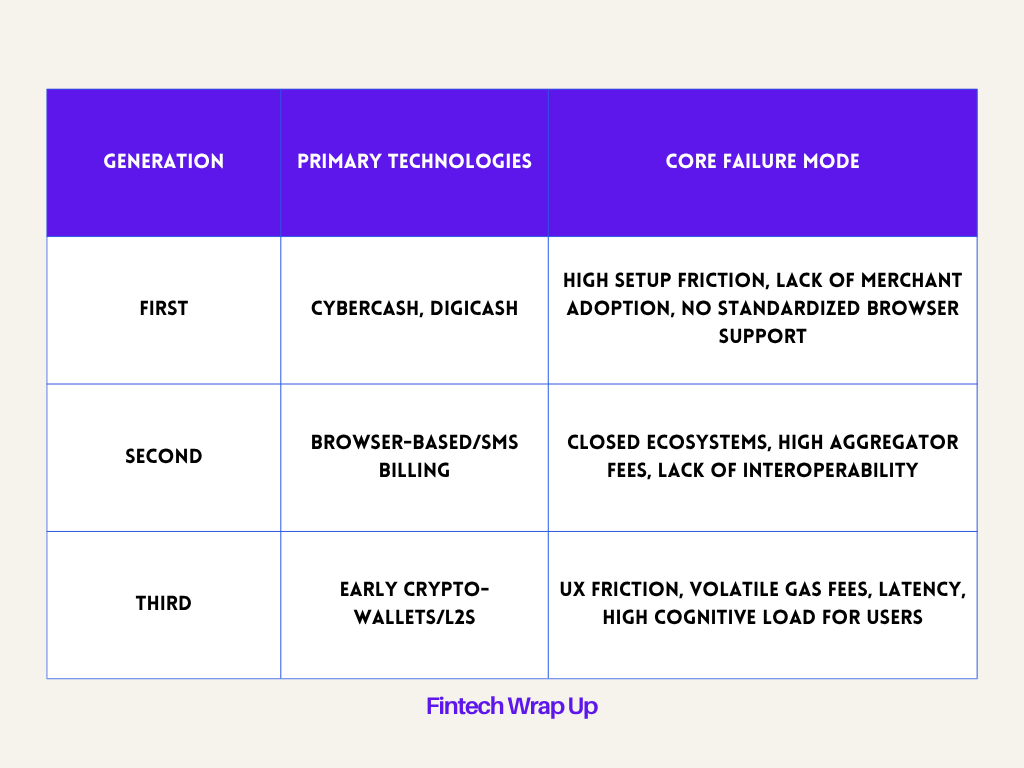
MPP succeeds where these failed because it eliminates the human decision point. For an agent, the cost of a transaction is a variable in an optimization function; it does not rely on an emotional event. This allows for sub-cent transaction models to finally become viable at scale.
MPP technical architecture
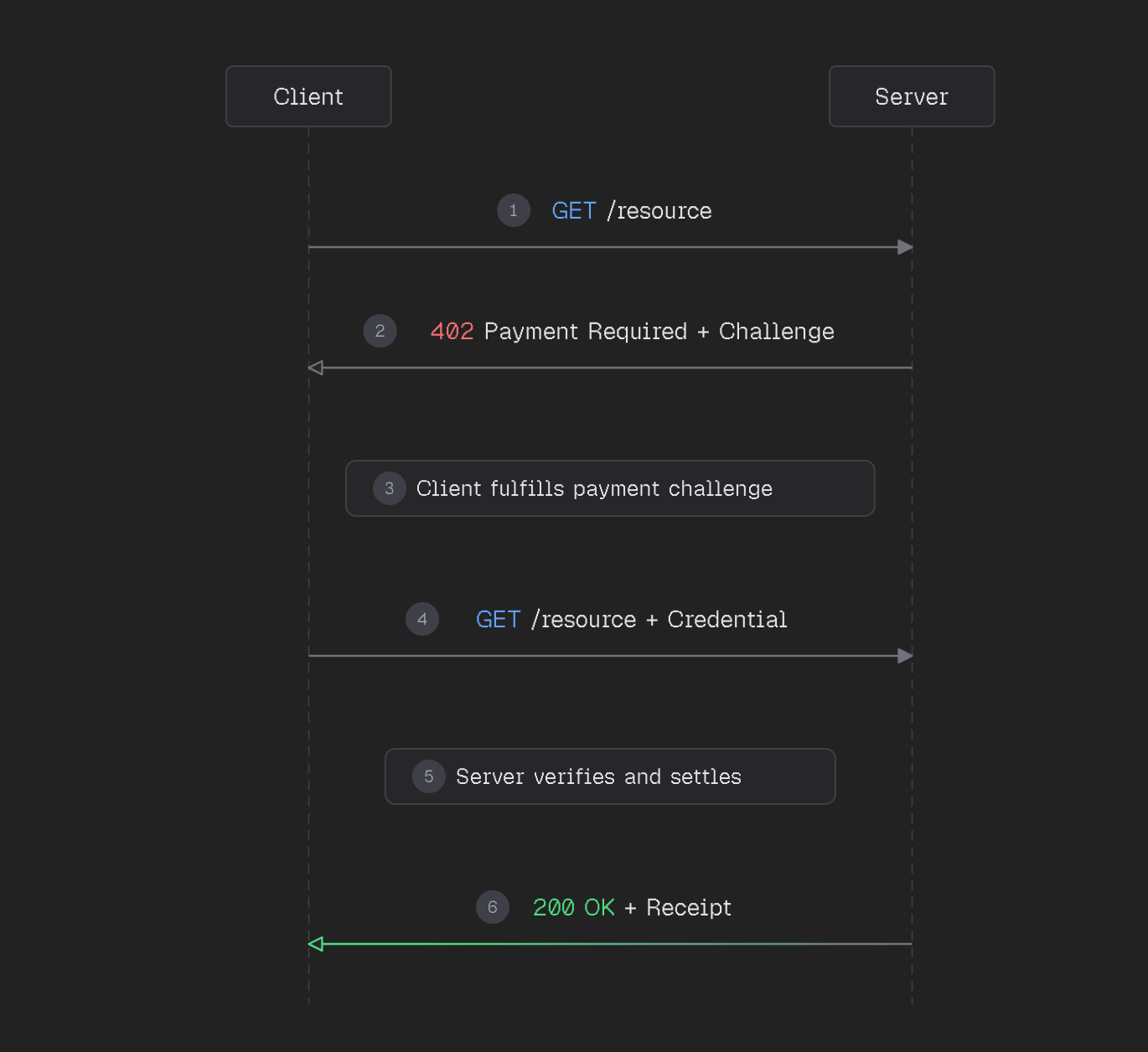
The core of MPP is its reliance on standard HTTP semantics, specifically the “Payment” HTTP Authentication Scheme proposed to the IETF. The protocol is a deterministic state machine that operates in a single round trip, removing the need for API keys or pre-existing accounts.
The five-step request-response cycle
The protocol operates through a formal sequence that embeds payment directly into the transport layer:
Resource Request: The agent initiates a standard request to a protected endpoint, such as POST /api/search.
Payment Challenge: The server intercepts the request and returns an HTTP 402 Payment Required status. The response includes a WWW-Authenticate: Payment header containing the payment challenge, which specifies the price, accepted currencies, and recipient address.