

Giving an AI agent a task is straightforward. Giving it permission to spend your money is harder. The agent needs a budget, a way to pay, and clear limits on what it can buy.
This week Stripe launched Link Balance, a new product that gives autonomous AI agents balances.
The user decides how much authority to delegate before the agent starts buying. That could make instructions such as “buy this item if the price falls below $90” useful beyond sending a price alert. The agent could complete the purchase within an agreed budget.
For payments companies, this raises a question that goes beyond checkout conversion: who will manage the money and permissions behind automated purchasing?
From saved payment details to delegated spending
Link already gives Stripe a consumer wallet. Customers can save payment methods and reuse them across supported checkouts. Stripe’s documentation describes support for cards and bank accounts, with other methods available depending on eligibility.
In April 2026, Stripe extended that wallet to agents. Link’s agent wallet could generate a one-time card or Shared Payment Token backed by an existing payment method. The agent could complete a purchase without receiving the customer’s underlying card details.
With Link Agent Wallet, AI agents such as Muse, Grok’s Bot, and Instinct can already make purchases on behalf of consumers using payment credentials issued through Link.
Link Balance adds a funded source of money for that relationship. A user can give an agent a defined amount to work with, alongside a per-purchase limit.
Consider a hypothetical instruction: “Buy these shoes when the price falls below $90.” The user could allocate $150 and permit purchases up to $100. A qualifying purchase would fit both constraints. The product promise is that the user need not return to approve it at the moment the price changes.
That example also exposes a boundary. A payment limit can stop a $140 purchase. It cannot, by itself, determine whether the agent selected the right size or a trustworthy seller. Payment controls and shopping judgement solve different parts of the task.
How the money reaches a merchant
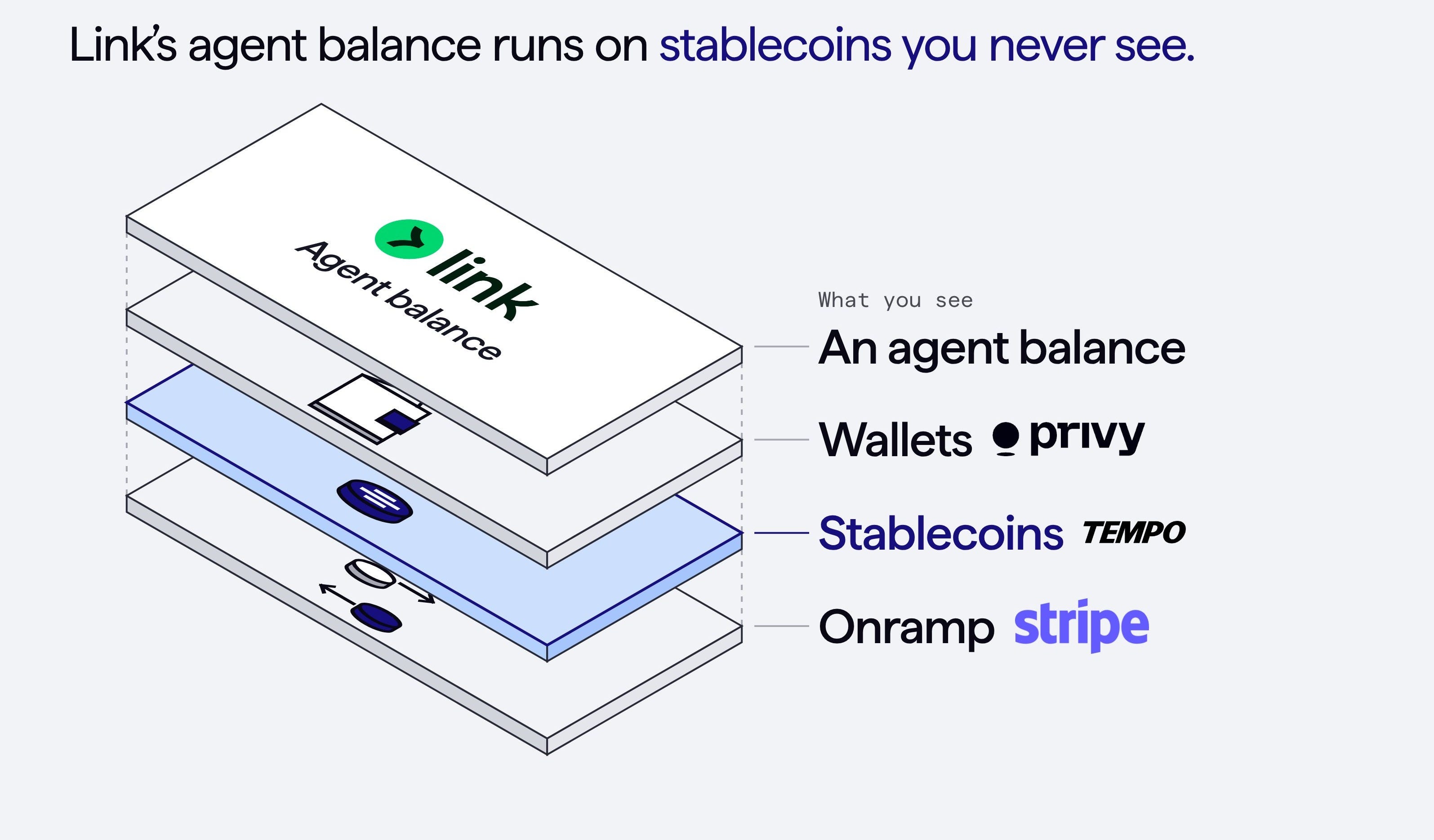
The funding flow starts with a debit card. Stripe Crypto Onramp converts those dollars into a dollar-denominated stablecoin on Tempo. The funds sit in a non-custodial wallet powered by Privy, while the customer sees a balance expressed in dollars.
Link Agent Wallet enforces the per-purchase limit. Stripe Issuing supplies a virtual debit card backed by the balance, allowing the agent to pay through existing card checkout flows. Merchants can receive a card payment without adding stablecoin support.
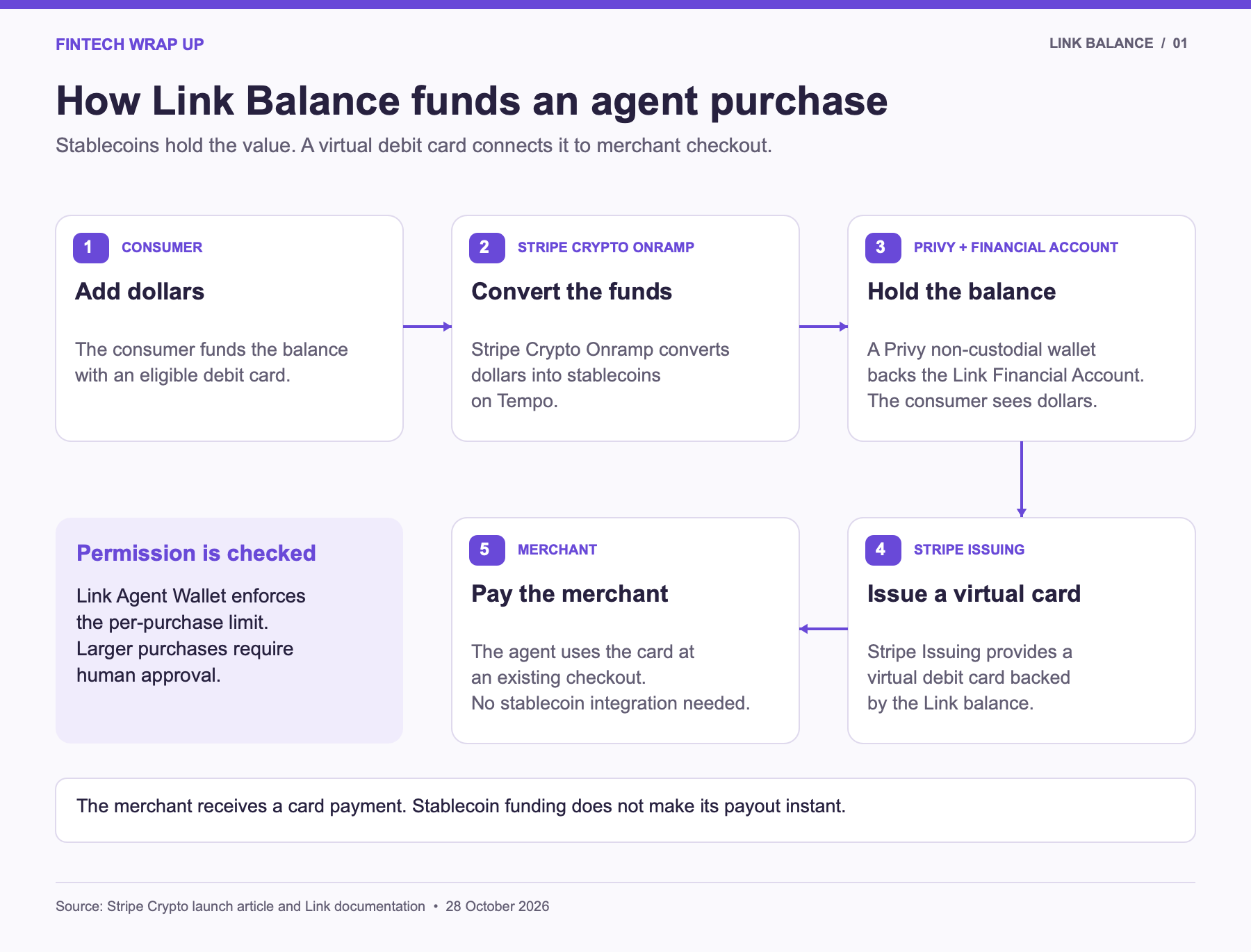
This architecture connects two systems with different strengths. Stablecoins provide the underlying digital money infrastructure. Cards provide access to merchants that already accept them.