

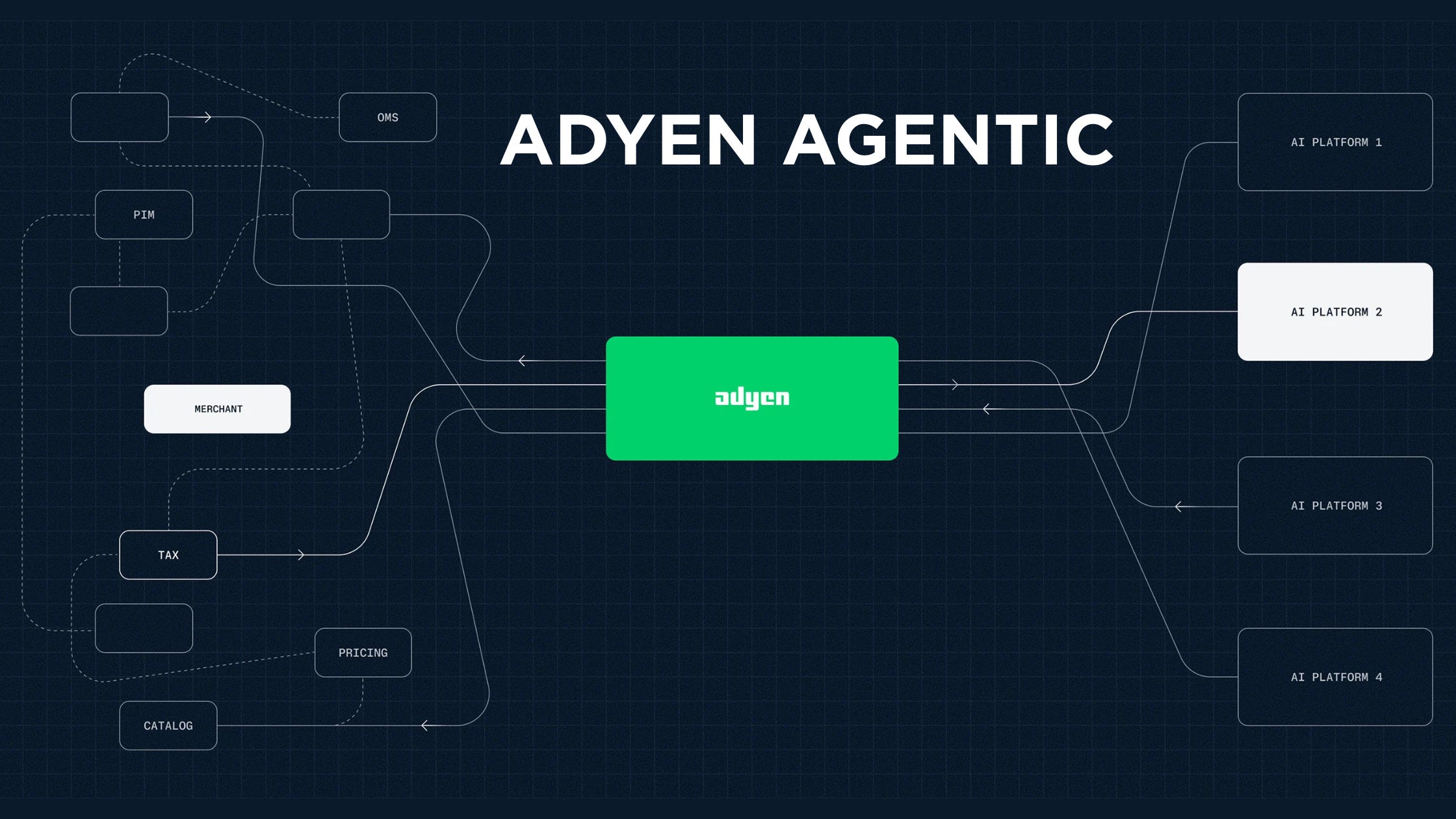
The evolution of digital commerce has arrived at a critical structural pivot. Previous major channel transitions, such as the shifts to mobile interfaces, social commerce, and multi-tenant marketplaces, redefined front-end customer experiences but left the underlying transactional architecture largely intact. In those conventional models, browsing sessions remained stateless, inventory validation was deferred until checkout, and risk engines examined single, synchronous authorization actions initiated by human telemetry. Agentic commerce represents a fundamental inversion of this legacy paradigm: software agents act autonomously on behalf of users, sessions become highly stateful and persist over days or weeks, and identity, trust, and payment authorization must be managed over highly fragmented, asynchronous networks.
The primary bottleneck stalling this transition is not Large Language Model capability, but the lack of scalable transaction infrastructure. Modern enterprise systems face severe operational bottlenecks: protocol fragmentation, obsolete product data structures, rigid legacy checkout stacks, the trust paradox of distinguishing legitimate agents from malicious automation, and the high engineering overhead of bespoke onboarding. McKinsey and Bain project that the global agentic commerce market will reach between 3 trillion and 5 trillion dollars by 2030, highlighting the massive scale of the economic opportunity. Accenture estimates that by 2030, over 30% of online commerce will run through AI agents, representing close to 3.1 trillion dollars in transactions. To prevent a fragmented ecosystem of closed gardens, Adyen launched Adyen Agentic on June 16, 2026. Acting as an open abstraction layer, this product operates as a universal translator, enabling merchants to integrate once and transact across multiple conversational AI platforms without rewriting core commerce databases.
The developer documentation pivot
In the early phase of agentic development, integrating a merchant with an AI agent platform was a bespoke, multi-month engineering effort. Each connection required coordinating mismatched data formats, custom backend systems, and fragmented security protocols across separate teams and timelines. This point-to-point scaling model proved fragile and unsustainable. If a merchant updated a single component of their core stack, such as an inventory management tool or a tax calculation engine, the direct connections to external AI platforms would break, introducing systemic fragility and locking out smaller retailers without dedicated engineering resources.
Traditional developer documentation websites, designed primarily for human readability on web browsers, aggravate this integration barrier. To navigate conventional documentation, AI agents must crawl pages over the internet, traverse complex reference chains, and frequently trigger rate-limiting security controls. This friction severely limits the speed and accuracy of agentic workflows.
To resolve this bottleneck, Adyen updated its developer documentation on June 2, 2026, making its entire resource stack natively agent-ready. By publishing its documentation as a dedicated markdown repository, including the implementation of the llms.txt standard synced directly with the active site, Adyen eliminated static-page crawling barriers. AI agents can now retrieve high-context, structured markdown files, rich metadata, and complete code samples across multiple programming languages (including .NET, Java, Python, TypeScript, Ruby, PHP, and Go) directly into their Retrieval-Augmented Generation pipelines.
This developer advocacy update was driven by measurable shifts in web traffic telemetry. Automated crawlers and machine-driven retrieval represent 11.6% of Adyen’s total documentation traffic volume, and user-directed AI assistant agents account for 78% of generative AI traffic, fetching content dynamically to answer active developer prompts during coding sessions. Traditional web layouts act as a significant bottleneck for machine runtimes: 29 % of AI requests land on homepages and 12 % hit robots.txt files because crawler bots spend processing cycles attempting to reverse-engineer site hierarchies. Standardizing documentation context acts as a critical prerequisite for building an open, interoperable transactional layer.
Technical architecture of Adyen Agentic
Adyen Agentic is architected as a suite of modular APIs natively integrated into the parent financial technology platform. Rather than forcing a complete system overhaul, this middleware layer translates transaction parameters between legacy databases and diverse agent protocols. The product is structured into three specialized architectural layers, mapping to the discovery, validation, and settlement phases of the buyer journey.
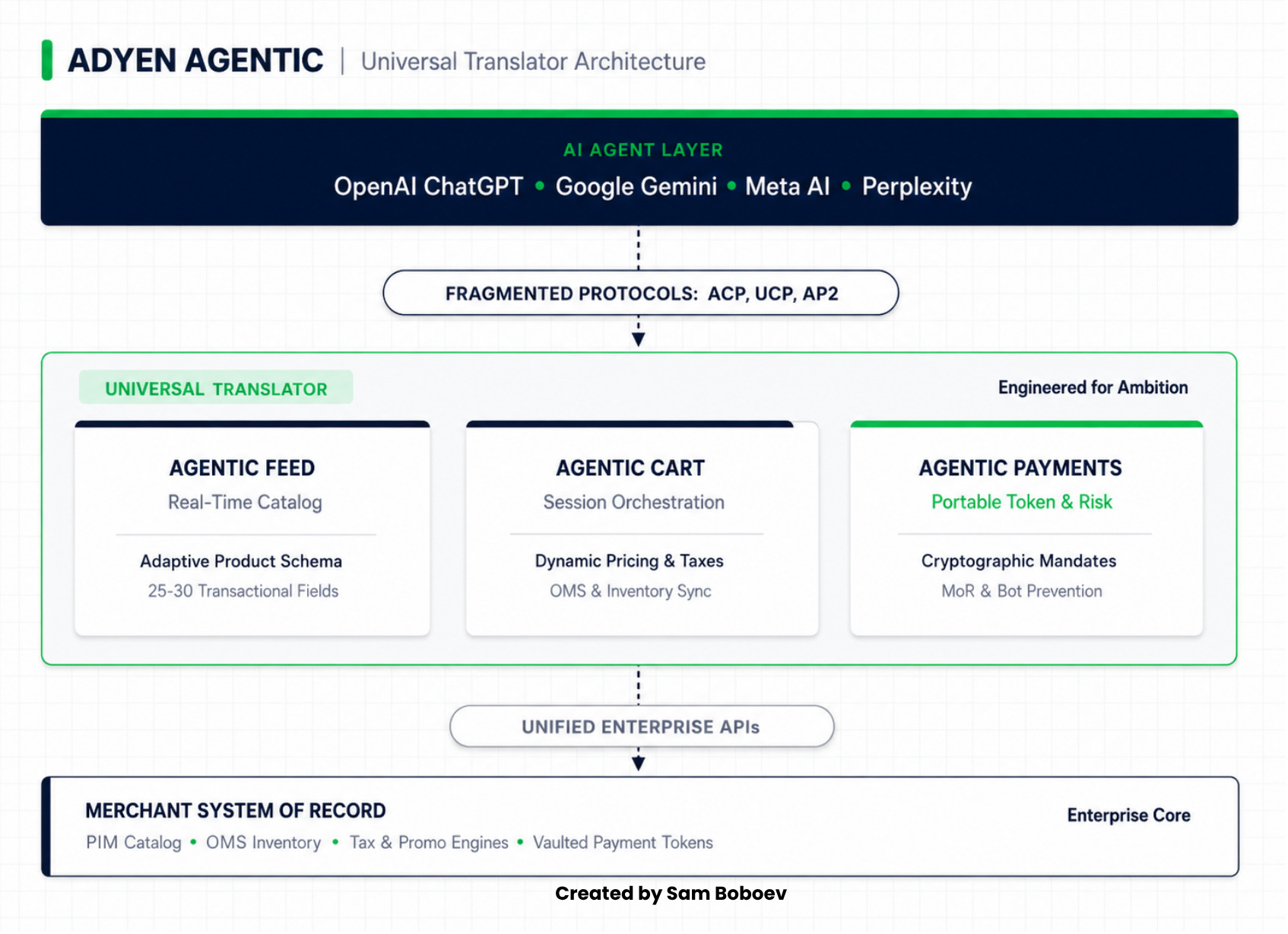
Agentic Feed
Traditional product feeds, such as those optimized for search engine marketing or social media advertisements, are designed as digital brochures. They typically carry around ten basic attributes (including name, price, image URL, and category) and rely on the human reader to infer details or navigate ambiguities. If a description lacks physical specifications or if inventory levels are slightly out of sync, a human customer can wait, refresh, or ask a question.